The Town That Existed Twice: How One Mapping Error Gave a Midwest Community a Forty-Year Double Life
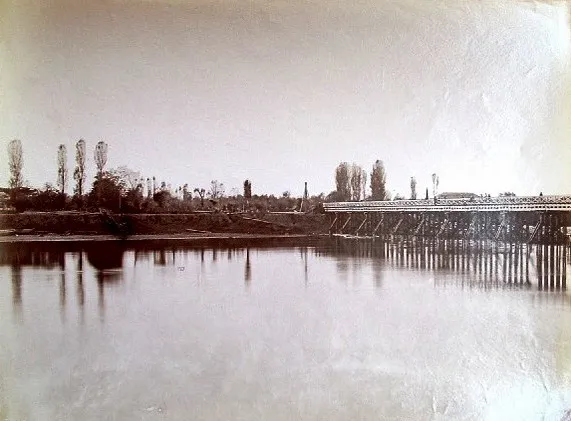
Photo: Dmitri Yermakov, Public domain, via Wikimedia Commons
The Census and the Mistake That Kept Growing
The 1880 United States Census was an enormous undertaking. Enumerators fanned out across a country that was expanding faster than its own maps could track, counting people in cities, farming communities, railroad towns, and settlements so new they barely had names yet. Errors were inevitable. Most of them were small — a misspelled surname here, a missed household there — and most were caught and corrected before they could cause lasting damage.
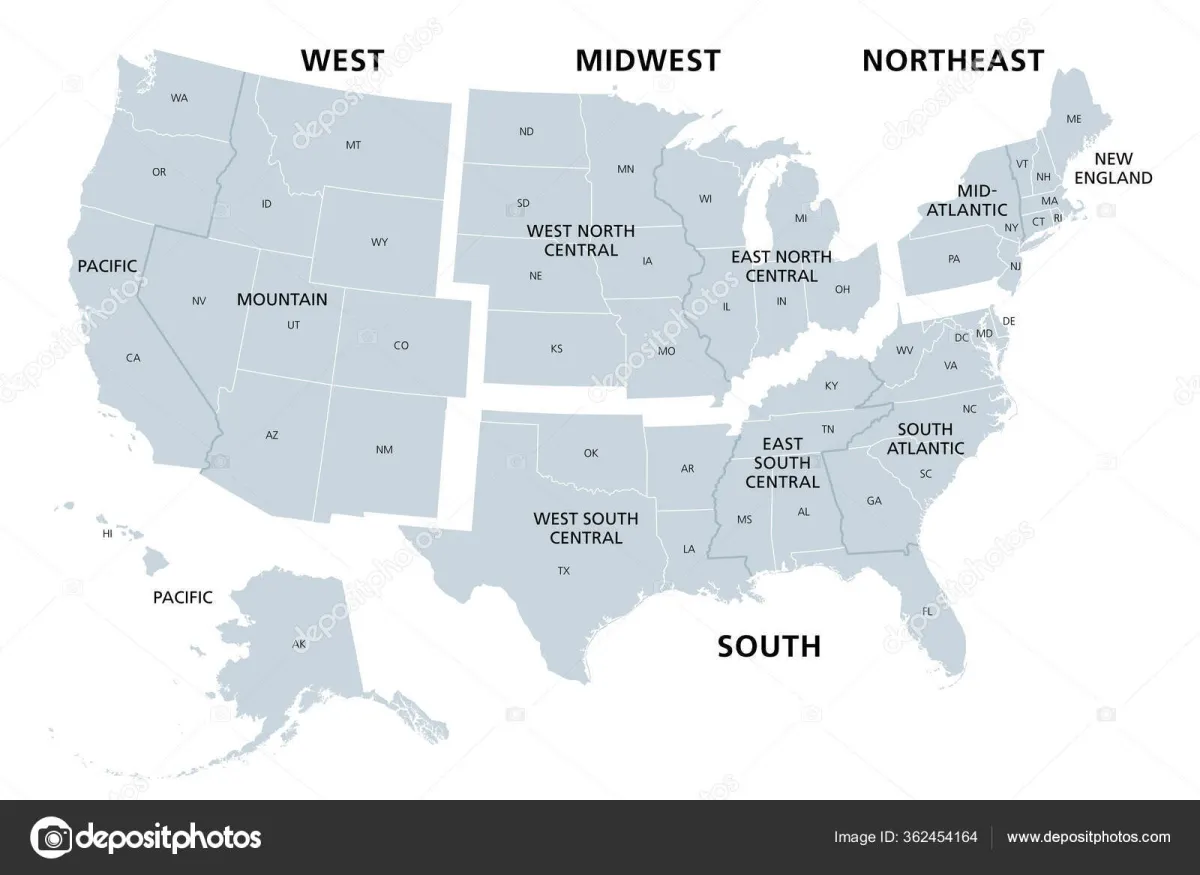 Photo: United States Census, via st3.depositphotos.com
This one was not caught. And it was not small.
Somewhere in the process of tabulating a small Midwestern community — a modest farming town with a straightforward name and a population that could fit comfortably in a single church hall — a mapping error split the settlement into two distinct entries. The town appeared once under its correct name and geographic coordinates, and then appeared again under a slightly different spelling or a marginally different recorded location, close enough to be the same place but different enough that the clerks processing the data treated them as separate communities.
The Census Bureau published both entries. Two towns, same population, same geography, same residents — officially, separately real.
Two Towns, One Set of People
For the first few years, the duplication was essentially harmless. Census data from that era wasn't cross-referenced in real time. Federal agencies worked from the published numbers, and the published numbers said there were two towns. Nobody on the ground noticed, because on the ground there was still only one town, going about its business in the normal way.
The trouble began as federal programs started using census data to allocate resources.
Because the town appeared twice in the official record, it was counted twice when federal allocations were calculated. Infrastructure assessments, land surveys, and various early federal programs that used population data as a baseline all processed the duplicated entry without flagging it. The community received attention and in some cases funding calibrated for two communities.
Local officials were, by most accounts, not entirely clear on what was happening. The federal government communicated through layers of state offices and county intermediaries. If money arrived or programs were extended, the natural assumption was that the calculations were correct. Nobody was going to call Washington to report that they might be receiving too much.
The Jurisdictional Tangle
The situation became genuinely strange when the duplication began affecting local governance.
As federal and state agencies built out their administrative maps using census data as a foundation, some of them treated the two entries as separate jurisdictions. This created a situation where, on paper, the town had two sets of administrative designations — different reference numbers, different file codes, different correspondence addresses within the bureaucratic system.
In practice, this meant that the community occasionally received duplicate correspondence from state agencies, that some federal forms listed the town under one designation while others used the second, and that legal documents sometimes had to specify which version of the town they were referring to — a clarification that was both necessary and surreal, given that the two versions occupied exactly the same physical space.
Elected officials from the actual town sometimes found themselves corresponding with agencies that had their community filed under the wrong name, requiring explanations that were difficult to make without sounding either confused or dishonest.
Property records, in some counties, were affected as well. Deeds recorded under one version of the town's name didn't automatically appear in searches conducted under the other version, which created title ambiguities that took years of individual correction to resolve.
The Archivist Who Noticed
For roughly four decades, the double town persisted in the federal record, quietly compounding. The people who might have caught it — census officials, federal administrators, state-level bureaucrats — were all working from the same flawed source documents. The error had become load-bearing. It was holding up too much paperwork to be easily visible.
The person who finally spotted it was not a federal official. She was an archivist working on a local history project sometime in the early twentieth century, cross-referencing census records against county land surveys and church membership rolls. When she laid the federal data next to the county data, the duplication was immediately obvious. The federal record showed two communities. The county record showed one. The land surveys showed one. The church rolls showed one.
She wrote up her findings and submitted them — through what must have been a frustrating sequence of bureaucratic channels — to the appropriate federal offices.
The Quiet Erasure
What followed was, by all accounts, handled with considerable discretion.
Federal agencies do not enjoy publicizing the discovery that they have been officially recognizing a nonexistent town for forty years. The correction process involved amending census records, updating administrative databases, reconciling overlapping file codes, and quietly notifying the various state and county offices that had built their own records on top of the federal error.
The duplicate town was removed from the official record without ceremony. There was no press release. The correction appeared in amended federal documents as a technical adjustment, the kind of bureaucratic housekeeping that nobody outside the relevant offices was expected to notice.
The actual town — the one that had existed all along — continued exactly as before, now with the modest distinction of having once been two places at the same time.
What It Says About the Systems We Trust
The forty-year double town is a remarkable story not because anyone did anything wrong, exactly, but because of what it reveals about the fragility of official records.
The census was the authoritative source. Every agency downstream trusted it. When the source contained an error, the error propagated through every system that depended on it, growing more entrenched with each passing year. Nobody was in a position to catch it by working within the system, because the system itself was the problem.
It took someone working outside the official framework — an archivist chasing a local history project, not a federal auditor — to hold the official record up against reality and notice that they didn't match.
The town that existed twice is gone from the record now. But the lesson it left behind is still there, embedded in the story of how a single mapping mistake in the 1880s created forty years of bureaucratic fiction that everyone accepted because it was written down in an official document.
Official documents, it turns out, are only as reliable as the person who made them — and that person, in this case, was having a very bad day.