The Vaccine That Started in a Trash Can
Science has an official story about how breakthroughs happen. A researcher identifies a problem, designs an experiment, collects data, and draws a conclusion. The process is orderly. The discovery is intentional. The path from question to answer runs in a straight line.
The unofficial story, the one that shows up when you dig into the actual lab notebooks and incident reports, looks considerably messier. Penicillin came from a contaminated petri dish that Alexander Fleming almost threw away. Teflon was discovered by a researcher chasing a completely different compound. The history of medicine is quietly full of moments where the most important thing that happened was an accident — and where the person who had the accident almost didn't notice what they'd found.
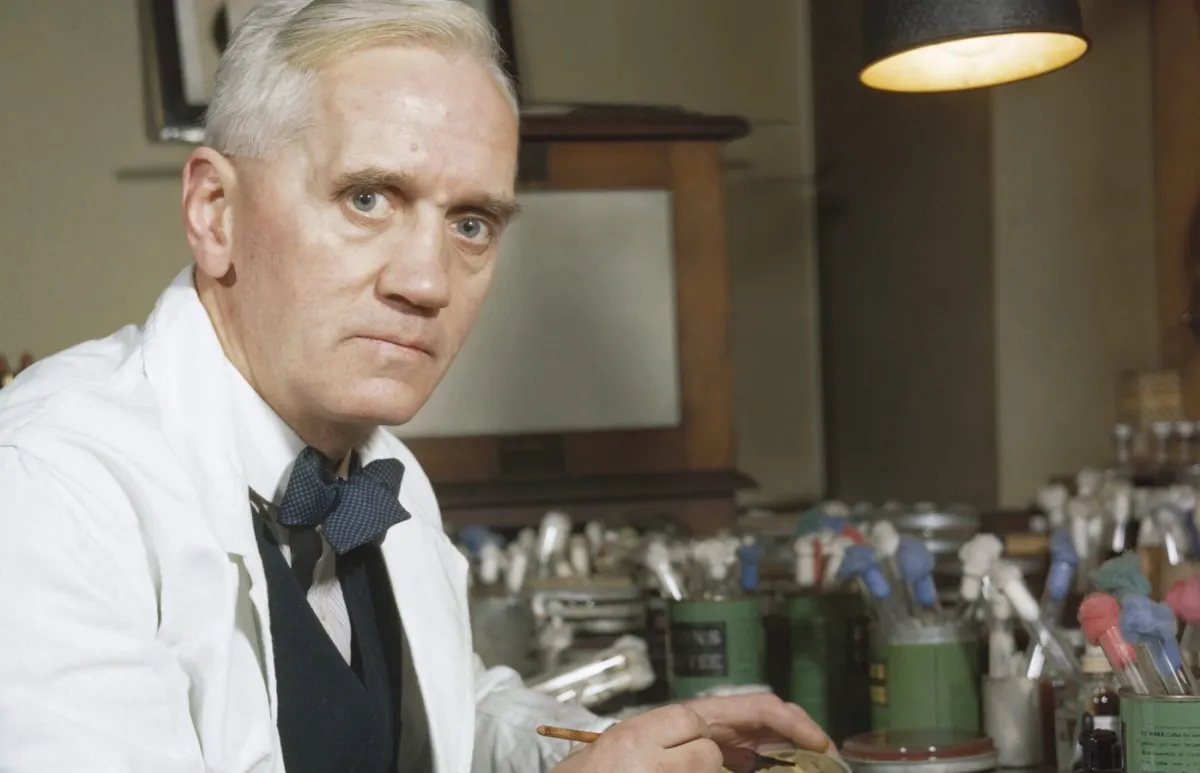 Photo: Alexander Fleming, via www.sciencehistory.org
This is one of those stories.
The Experiment That Was Going Wrong
In a mid-20th-century research laboratory, a team was running a study with clearly defined goals. They were not looking for a vaccine. They were not expecting to find one. The work had a specific target, a specific methodology, and a specific set of outcomes that would count as success.
Somewhere in the middle of that work, a lab technician noticed that one batch of cultures had been compromised. Contamination in laboratory settings is not unusual — it's an occupational hazard, a reason for strict protocols, and a source of constant low-level frustration. The standard response is straightforward: discard the contaminated material, document what happened, and continue with unaffected samples.
The contaminated cultures were set aside for disposal. They should have been gone by the end of the day.
The Researcher Who Looked Twice
The detail that changed everything was small enough to miss entirely. A researcher — not the one running the primary study, but someone who happened to be in the lab and happened to glance at the compromised cultures before they were discarded — noticed that something unexpected was happening in the contaminated samples. The contamination hadn't simply ruined the cultures. It had produced a reaction that didn't match anything in the planned experimental protocol.
This is the moment that separates the discoveries that happen from the ones that don't. Most contaminated samples get thrown out. Most anomalies get noted and forgotten. The researcher who paused over these particular cultures did something that sounds simple but requires a specific kind of scientific temperament: they decided the anomaly was more interesting than the inconvenience.
The cultures went back into observation instead of into the waste bin.
Results Nobody Asked For
What followed was an unplanned experimental detour that the researcher pursued largely on their own time and without the formal backing of the institution. The original study continued on its intended track. The contaminated cultures became a side project — underfunded, officially unrecognized, and viewed by colleagues with a mixture of polite skepticism and thinly veiled impatience.
The results, when they came, were striking. The contamination — a microbial agent that had been treated as a nuisance — had triggered an immune response in the culture environment that suggested potential protective properties against a pathogen the team hadn't been studying at all. The researcher's follow-up work, careful and methodical despite the informal circumstances, pointed toward a mechanism that could be developed into a vaccine.
Presenting those findings to the institution was its own ordeal. The results didn't fit the study's stated goals. They hadn't been produced through the approved experimental design. The pathogen in question wasn't the one the lab was funded to investigate. Every institutional incentive pointed toward treating the findings as a distraction — interesting, perhaps, but not the institution's problem.
The Fight to Be Heard
The researcher faced a version of a problem that appears repeatedly in the history of accidental discovery: how do you get an institution to take seriously a result that nobody asked for and that complicates the existing research agenda?
The answer, in this case, involved a combination of persistence, informal networking with researchers at other institutions who found the preliminary data compelling, and the eventual publication of results in a journal that gave the findings enough visibility to attract outside interest. Once other researchers began attempting to replicate the work — and succeeded — the institutional resistance softened. The vaccine moved through development, faced its own set of regulatory and clinical hurdles, and eventually reached approval.
It is still in use today. The pathogen it protects against has caused significant harm in populations without access to the vaccine. The protection it provides is real and measurable.
None of it was supposed to happen.
Why Accidents Keep Saving Lives
The history of medicine is more comfortable crediting careful design than fortunate mistakes, which is understandable — you can't build a research system around hoping for lucky contamination events. But the frequency with which genuine breakthroughs have emerged from unplanned observations suggests something important about how discovery actually works.
The planned experiment creates the conditions. The anomaly appears because skilled people are paying close attention to complicated systems. The breakthrough happens because someone decides that the unexpected result is worth understanding rather than discarding.
That decision — to look twice at the thing that wasn't supposed to be there — is itself a skill. It requires a tolerance for uncertainty, a willingness to follow a thread that leads away from the approved agenda, and enough scientific confidence to believe that an unexplained result might be telling you something real.
The researcher who pulled those cultures out of the discard pile had all of that. They also had, by their own later account, a moment of pure curiosity that they almost talked themselves out of.
The trash can was right there. The cultures were already set aside. It would have been so easy to just let them go.
Instead, someone looked twice. And that, in the quiet and unglamorous way that medicine often actually advances, was enough.