Six Days of Shelling an Island Nobody Was Defending: The Battle Where the Only Casualty Was the Ammunition Budget
Here's a war story with no enemy in it. In the final stretch of World War II, the United States Navy and Army Air Forces converged on a small, scrubby Pacific atoll that intelligence officers had confidently marked as a Japanese stronghold. For days, ships pounded it with shells. Bombers plastered it from above. Reconnaissance photos showed gun emplacements, supply depots, and signs of organized resistance.
When Marines finally went ashore, they found exactly what you'd expect to find after that much ordnance: craters, sand, and silence. No garrison. No fortifications worth the name. No enemy at all, at least not in any number that could have justified the fireworks.
The Reports Were Too Good to Question
To understand how this happened, you have to understand how intelligence worked in the Pacific theater. Aerial photography was the gold standard, and interpreters were under enormous pressure to find something in every frame. A shadow that could be a bunker usually was a bunker. A pile of debris that might be a supply cache went into the report as a supply cache.
Nobody lied, exactly. But there was a powerful incentive to confirm what everyone already believed: the island was contested ground, so it must be defended. Each analyst's report built on the last one's assumptions. By the time the bombardment plan was drafted, the fictional garrison had grown fortifications, stores, and — implicitly — a will to fight that nobody had ever actually observed.
And here's the part that makes it a genuinely human story rather than just a bureaucratic one: at no point in the chain of command was it anyone's job to say "wait, are we sure?" The bombardment had been scheduled. The landing had been planned. Questioning the premise would have meant delaying the operation, and no junior intelligence officer wanted his name attached to that memo.
Two Weeks of Very Expensive Weather
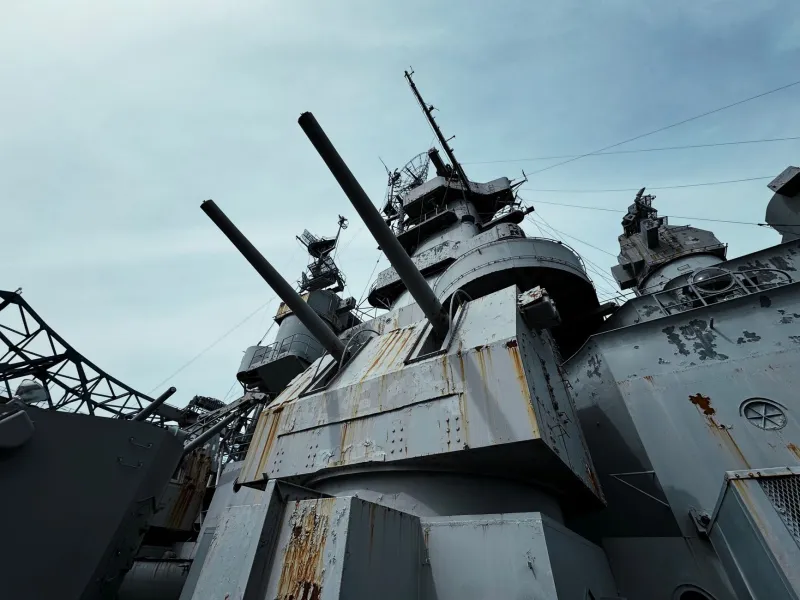
The shelling itself was, by all accounts, thorough. Naval gunners walked their fire across the island in methodical grids. Aircraft followed up with bombs. If a hidden Japanese garrison had existed, the preparatory bombardment would have been the story — a textbook example of softening a defended position.
Instead, the whole thing reads like the Navy firing at weather. The island offered no return fire. No signals. No movement. Just an increasingly cratered lump of coral doing its best impression of a battlefield.
When the landing force came ashore and reported the island empty, the reaction wasn't outrage so much as a quiet shuffling of paperwork. The operation was declared a success in the sense that all objectives had been secured. Which, technically, was true. The objectives had been imaginary, and they were now safely in American hands.
Why Nobody Said Stop
The remarkable thing isn't that intelligence was wrong — intelligence is wrong all the time. The remarkable thing is the shape of the error. Every stage of the process worked exactly as designed, and every stage made the same kind of small, defensible mistake, and the accumulated result was a naval bombardment of nothing.
There's a lesson in there about institutions that this site keeps running into: the failure is rarely one bad decision. It's a hundred reasonable ones stacked in a row, each one slightly harder to question than the last. The officer who drafted the report trusted the photos. The planner trusted the report. The gunnery officer trusted the planner. By the time doubt could have entered the conversation, it would have had to travel upstream against the full momentum of the operation.
The Receipts Are Still There
You can still find the after-action reports in the National Archives, and they make for surreal reading — pages of detailed bombardment coordinates for a target that, in the blunt language of the landing report, was found to be unoccupied. Historians who've combed the Pacific campaign files have found similar episodes scattered through the war: phantom garrisons, imaginary airfields, defenses that existed only in briefing rooms.
The empty island wasn't a scandal, and nobody was court-martialed. It was something stranger — a moment where the machinery of war ran perfectly and produced, as its output, a very expensive hole in the ocean. The atoll never surrendered. It never had to. It just sat there, absorbing the full attention of the world's most powerful military, until everyone involved quietly agreed to move on.
Which might be the most bureaucratic ending imaginable: an entire battle fought, won, and filed away — against nobody at all.