The Ghost Writer of Independence Hall: How Bad Penmanship Rewrote Constitutional History
When History Gets Handwritten Wrong
Somewhere in the dusty archives of American history lies one of the most consequential clerical errors ever made. It's the kind of mistake that makes you wonder how many other "facts" we take for granted are really just the result of someone having terrible penmanship on a very important day.
In September 1787, as the Constitutional Convention wrapped up its exhausting summer of debate in Philadelphia, delegate Jacob Shallus was tasked with creating the official engrossed copy of the Constitution. What nobody realized at the time was that Shallus had apparently never met a letter "S" he couldn't make look like an "F," or a "P" he couldn't transform into something resembling a "B."
 Photo: Constitutional Convention, via i.pinimg.com
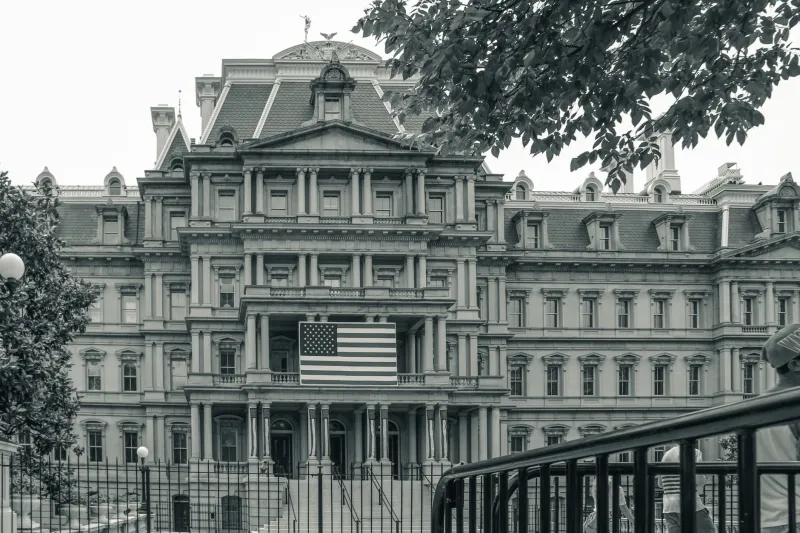
 Photo: Independence Hall, via www.bestes-aus-polen.de
The Mix-Up That Fooled Historians
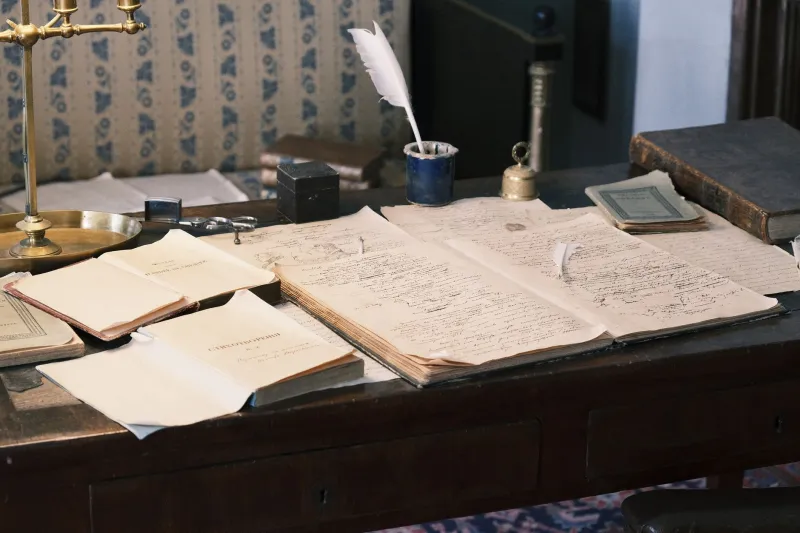
The problem centered around attribution notes scrawled in the margins of working drafts. When Convention secretary William Jackson compiled his final records, he relied heavily on these margin notes to track which delegates had proposed specific language. Unfortunately, Jackson was trying to decipher handwriting that would have challenged a pharmacist.
What emerged was a systematic case of mistaken identity. Passages that had actually been crafted by lesser-known delegates from smaller states were suddenly attributed to more prominent figures. Most notably, several key sections of Article IV — dealing with interstate relations and the privileges of citizenship — were incorrectly credited to a delegate who had been sick with fever during the relevant debates.
The irony is almost too perfect: the document that established our system of government was itself a victim of governmental inefficiency.
A Century of Confident Ignorance
For more than 100 years, historians confidently cited these attributions in textbooks, biographies, and scholarly papers. The "author" of these constitutional passages became celebrated for his prescient understanding of federal relationships. Universities named buildings after him. His hometown erected a statue.
Meanwhile, the actual authors — delegates whose names appeared in Jackson's notes as illegible squiggles — faded into historical footnotes. Their contributions were either attributed to committee work or simply listed as "unknown authorship."
The mistake was so clean and consistent that nobody thought to question it. After all, the handwriting looked official, the attribution seemed plausible, and checking the work would have required comparing dozens of documents scattered across multiple archives.
The Scholar Who Noticed Something Strange
The error might have persisted indefinitely if not for Dr. Margaret Thornfield, a graduate student at Princeton in 1891 who was researching state ratification debates for her dissertation. While cross-referencing delegate speeches with constitutional text, she noticed something odd: the celebrated author of Article IV had given a speech to the New Jersey ratifying convention that directly contradicted the very passages he was supposed to have written.
 Photo: Dr. Margaret Thornfield, via fs.opisto.fr
Not only did he disagree with the language, he seemed genuinely confused by it. "I confess I do not fully comprehend the intent of this section," he told the New Jersey delegates, referring to text that historians had been crediting to his brilliant foresight for decades.
Thornfield spent two years tracking down original documents, comparing handwriting samples, and reconstructing the actual timeline of the Convention's final days. What she found was a comedy of errors that had somehow become accepted historical fact.
The Real Authors Emerge
The actual authors of the misattributed passages turned out to be a fascinating group. One was a Maryland lawyer who had proposed the language during a late-night committee session when most delegates had gone home. Another was a Virginia planter who had suggested crucial amendments during the final week of editing.
These men had written some of the Constitution's most enduring language, but their contributions had been lost to bad handwriting and hurried record-keeping. When Thornfield published her findings in 1894, it triggered a minor crisis in constitutional scholarship.
Suddenly, biographers had to revise their assessments. Law schools had to update their constitutional law courses. And at least one bronze statue had to get a very awkward new plaque.
What This Means for Everything Else
The Constitution mix-up raises uncomfortable questions about historical certainty. If scholars could be wrong about something this fundamental for over a century, what else might they have gotten wrong?
The answer, unfortunately, is probably quite a lot. Historical attribution often relies on exactly the kind of documentary evidence that proved so unreliable in this case. Margin notes, secretary summaries, and contemporary accounts are all subject to the same human errors that confused constitutional authorship.
The Lesson Nobody Wanted to Learn
Perhaps the strangest part of this story is how little it changed historical methodology. You might expect that discovering such a massive error would lead to systematic re-examination of other attributions. Instead, most historians simply corrected this particular mistake and moved on.
After all, questioning everything would be an enormous amount of work. It's much easier to assume that this was a unique case of bad luck rather than a symptom of broader problems with how we establish historical facts.
The Constitution itself, of course, works just fine regardless of who actually wrote which parts. The words matter more than the attribution. But the story serves as a reminder that history is often less certain than it pretends to be, and sometimes the most important thing about a document is not who wrote it, but who was taking notes when they wrote it.