The Broken Fence That Rewrote the Sky: How One Iowa Farmer Accidentally Invented Air Law
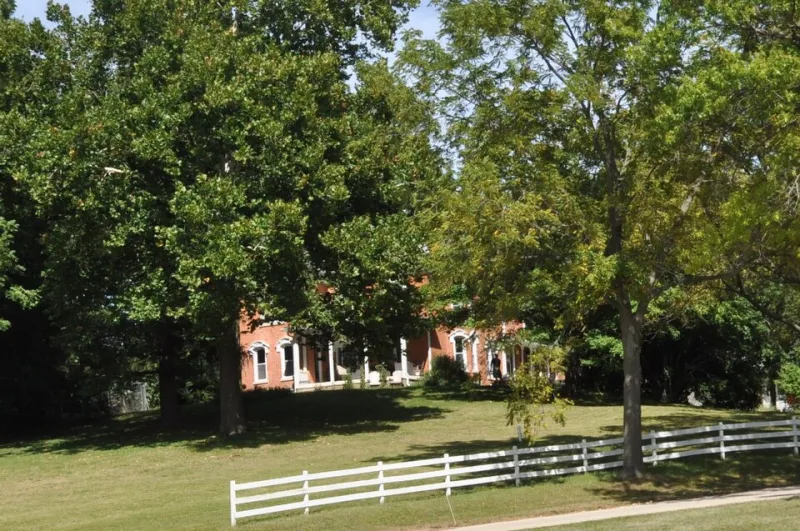
Photo: Magicpiano, CC BY-SA 4.0, via Wikimedia Commons
A Fence, a Storm, and a Very Stubborn Man
Somewhere in rural Iowa, in the first decade of the twentieth century, a farmer looked out at his collapsed fence line and decided someone had to pay for it.
The culprit, as best he could determine, was wind. Not a neighbor's wind, not wind he'd been sold defective protection against — just regular atmospheric wind that had blown across his property, gathered speed over his fields, and taken out a section of fencing he'd spent good money putting up. The farmer, by most accounts a methodical and deeply unbothered-by-irony kind of man, decided to pursue the matter legally.
His neighbors thought he was eccentric. His lawyer reportedly needed a long moment before responding. But the farmer had a theory, and the theory — once it entered the American court system — turned out to be almost impossible to argue against.
The theory was this: if he owned his land, he owned what happened on it. And if wind caused damage on his land, then someone was responsible for not controlling that wind. The question of who was responsible is where things got genuinely strange.
The Legal System Meets an Invisible Trespasser
Early American property law had borrowed heavily from an old English legal principle with a Latin name that roughly translates to: whoever owns the soil owns everything from the depths of the earth to the heights of the sky. It was a tidy concept when English landowners were arguing about overhanging tree branches and underground streams. It was considerably less tidy when applied to air.
The farmer's initial complaint worked its way through local courts with the kind of momentum that only a truly committed grievance can generate. Lower courts, faced with a complaint that technically had legal standing under existing property doctrine, found themselves unable to simply dismiss it. The law, as written, did suggest that a landowner had rights extending upward from his property. If that was true, and wind was moving through that vertical column of owned air without permission, then something legally awkward was happening every time a breeze crossed a property line.
The courts began passing the problem upward.
When Federal Judges Have to Define the Sky
By the time the dispute reached federal consideration, it had transformed from a complaint about a fence into a foundational question about the nature of property itself. Federal judges, working through the case with what must have been a mixture of genuine legal rigor and quiet disbelief, eventually produced a ruling that tried to do two things simultaneously: resolve the farmer's complaint and establish a workable principle for all the air-related disputes that would inevitably follow.
The ruling they produced drew a line. Not a physical line — an altitude line. Below a certain practical threshold, a landowner did have meaningful rights over the airspace above their property. Above that threshold, the air was common and ungovernable, belonging to no one and everyone at once.
The farmer got a version of what he wanted. More importantly, American property law got a framework for thinking about vertical space that it had never formally needed before.
The Precedent That Forgot Where It Came From
What makes this story genuinely remarkable — and genuinely strange — is what happened to that ruling afterward.
Within a few decades, aviation was transforming American life. Airplanes needed legal clarity about who controlled the airspace they flew through. Could a landowner demand that a commercial aircraft get permission before crossing above his farm? Could a city claim ownership of the air column above its streets? These were not theoretical questions. They were urgent legal problems, and they needed answers fast.
The answers they reached back for came, in significant part, from the precedent established by an Iowa farmer arguing about wind damage to a fence.
The foundational legal logic that governs American aviation rights — the principle that landowners have limited, surface-adjacent airspace rights rather than infinite vertical ownership — traces a direct intellectual line back to that early ruling. Courts citing aviation property cases in the mid-twentieth century were building on a framework that had been constructed, somewhat accidentally, to settle a dispute that had nothing to do with airplanes.
Legal scholars who have traced this lineage tend to describe the original case in careful, neutral language. The words "fence" and "wind" do not generally appear in their citations.
Why It Still Matters
Today, as drone delivery services argue with homeowners about low-altitude flight paths, and as telecommunications companies negotiate rights for equipment mounted above private property, the same underlying legal architecture is still doing its work. The question of where your property ends and the common sky begins is very much an active legal conversation.
It is a conversation that got its initial shape from a man in Iowa who looked at a pile of broken fence boards and decided, with admirable stubbornness, that the atmosphere owed him an explanation.
He was, technically, right. The legal system just needed about fifteen years and several layers of federal review to figure out how to agree with him.
The fence, presumably, was eventually repaired. The law it generated is still standing.