Five Times the Most Boring Substance in the Room Became the Most Dangerous Thing in America
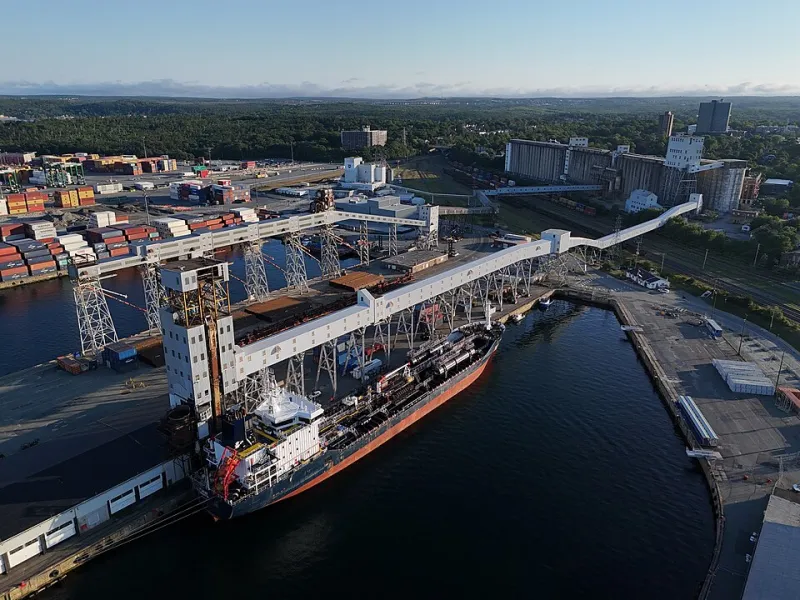
Photo: Quintin Soloviev, CC BY 4.0, via Wikimedia Commons
We like to think danger comes in threatening packaging. Warning labels. Hazard symbols. A certain ominous hiss. But the physics of disaster doesn't care what something smells like, and American industrial history is full of moments where the deadliest thing in the facility was something you'd put on pancakes.
The Foam That Ate an Airport
In 1994, a hangar at Kelly Air Force Base in San Antonio became the site of one of the strangest firefighting accidents on record. Fire suppression systems in aircraft hangars discharge enormous quantities of foam concentrate in an emergency — and one malfunctioned, dumping thousands of gallons of foam into the hangar and into the building's drainage system. The foam expanded violently, backed up through drains and floor openings, and flooded adjacent areas, in places several feet deep. Two airmen were killed, drowned in a substance whose entire purpose was to put out fires. Foam is mostly air and water, but under pressure in a confined pipe network, it behaves like a rising tide with no shoreline.
When Flour Becomes a Bomb
Any grain elevator operator in the Midwest can tell you about dust explosions, but the general public still refuses to believe it: flour, sugar dust, and corn starch are all explosive in the right conditions. The dust particles have enormous combined surface area, and when suspended in air at the right concentration, a single spark can set off a chain reaction — a pressure wave that shakes loose more dust, which ignites, which shakes loose more dust. In 1998, a grain dust explosion at the DeBruce grain elevator in Kansas killed seven men and injured more, one of the deadliest of its kind. The fuel was, essentially, bread before it got ambitious.
Coffee, at Pressure
In 2009, the SL-1 of the coffee world: a massive silo of roasted coffee beans at a facility in the town of — fittingly — Coffee County, Georgia, collapsed, burying a worker under roughly twelve tons of beans. Rescuers spent hours in a painstaking excavation that looked, from outside, like people digging through a giant's pantry. Beans flow like a fluid under the right conditions, and that's exactly the problem: they behave like quicksand with a pleasant aroma.
The Syrup Problem, Revisited
Everyone knows the Great Boston Molasses Flood of 1919 — the wave of molasses that killed 21 people and flattened a North End neighborhood. But the physics lesson didn't stick everywhere. Industrial facilities handling food-grade syrups and sugars learned, sometimes repeatedly, that warm viscous liquids in large tanks are stored energy. A tank failure releases a wave that doesn't splash so much as bulldoze. Studies after Boston showed the flood may have moved at 35 mph — faster than anyone could run, and faster than most people would believe syrup could travel.
The Takeaway Nobody Wants
The common thread in all of these isn't negligence exactly, or at least not only. It's a failure of imagination. Engineers design around the hazards they can picture, and nobody pictures drowning in fire foam. The materials themselves are governed by boring, well-understood physics — surface area, fluid dynamics, combustion limits — that simply don't match human intuition. The dangerous stuff doesn't look dangerous. It looks like breakfast.