Drive-To Disasters: Five American Landmarks Created by Single Terrible Moments
America's landscape looks eternal, but a surprising amount of it was rearranged in an afternoon. Not by erosion, not by ice ages — by single moments of human error, the kind you'd script for a disaster movie and get laughed out of the pitch meeting. Here are five places where the evidence is still sitting there, in plain sight, waiting for you to pull over and look at it.
The Lake That Filled Up in About Eleven Hours
In November 1980, a drilling crew probing for oil beneath Lake Peignur in Louisiana punched through into the Jefferson Island salt mine below. The lake then proceeded to do something lakes are not supposed to do: drain. The entire lake, along with barges, a marina, trees, and a good chunk of the shoreline, swirled into the collapsing mine in a matter of hours. A 65-foot geyser erupted from the mine tunnels as water flooded in.
By the next day, the lake had refilled — with water from a connecting canal, flowing backwards. Twelve acres of dry land had become part of the lake bottom. Miraculously, everyone in the mine got out. Today, Jefferson Island is a quiet spot with a reputation among locals as the place where the map had to be redrawn overnight.
Centralia, the Town That's Been on Fire Since 1962
A coal seam beneath Centralia, Pennsylvania caught fire — possibly from a trash burn that spread into an abandoned mine shaft — and it has never stopped burning. The fire spread beneath the town, cracking roads, venting toxic fumes through lawns, and eventually prompting the government to relocate nearly everyone.
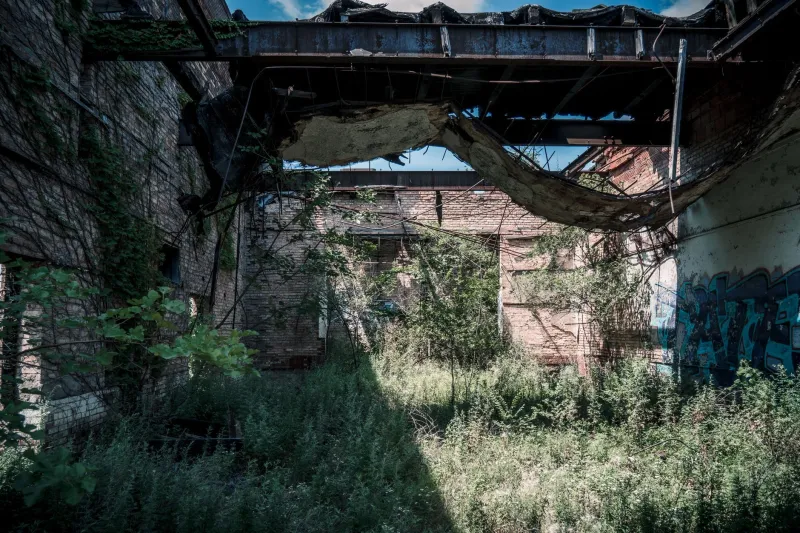
What's left is genuinely eerie: a former stretch of highway, Route 61, abandoned and graffiti-covered because the ground beneath it kept deforming. Officials tried rerouting, patching, and repairing; eventually they just built a bypass and let the old road go. You can still walk it. The fire beneath your feet is expected to burn for another couple of centuries.
The Crater Nobody Can Fully Explain
West of Winslow, Arizona, sits Meteor Crater — yes, the well-explained one — but the American West also holds craters whose origin stories stayed contested for decades. The point isn't the astronomy; it's the human comedy of it. For years, geologists and mining engineers looked at massive holes in the ground and argued, sometimes for generations, over whether they were volcanic, impact-related, or something else entirely. Meanwhile, the hole just sat there. Some of the early debates were so bitter that the crater's own name changed depending on which expert you asked.
The Highway That Had to Move
When the earth itself refuses to cooperate, roads lose. Several stretches of American highway have been permanently rerouted around ground that simply will not hold still — landslide-prone slopes where engineers rebuilt the road multiple times before conceding and drawing a new line on the map. In the most extreme cases, the old right-of-way is still visible from the new road: a ghost alignment of cracked asphalt sliding slowly downhill, season by season, a monument to the day someone decided where the road should go and the ground decided otherwise.
The Town Split by a Surveyor's Pencil Line
Border surveying sounds dull until you learn that a single miscalculation once put a town nominally in two states at once — with residents, businesses, and occasionally law enforcement unsure which state's rules applied on which side of Main Street. The error survived decades of legal wrangling, and in some cases the physical landscape — roads, buildings, even a house with rooms in two states — still reflects the original mistake.
Why These Places Matter
What ties these sites together is the scale mismatch: enormous, permanent landscape change from small, human-scale decisions. A drill bit an inch too deep. A match near the wrong shaft. A surveyor's arithmetic. You can drive to any of them, stand at the edge, and see exactly what one bad moment can do to a map. Bring a camera. The ground, in several cases, is still moving.