The Military Base That Never Was: How 50,000 Troops Lived in America's Most Secret Non-Place
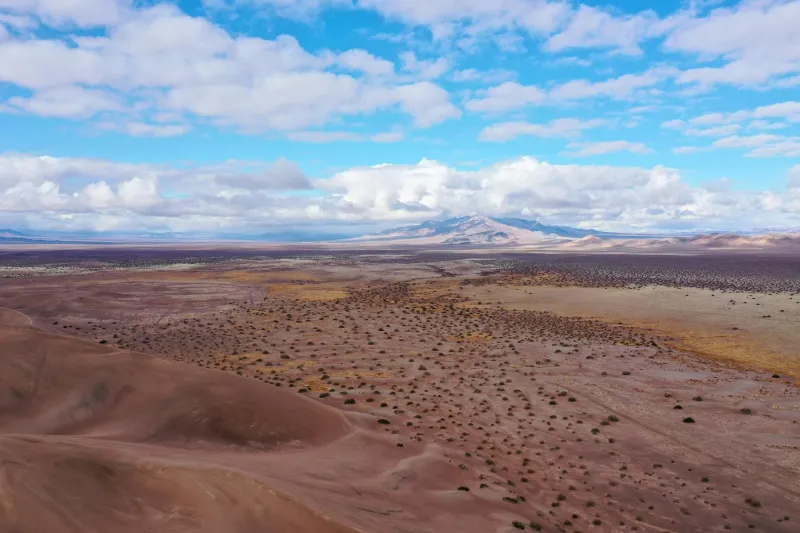
The Town That Wasn't There
Imagine running a city of 50,000 people — complete with hospitals, schools, shopping centers, and residential neighborhoods — while maintaining the official position that none of it exists. That's exactly what the U.S. military pulled off in the Nevada desert for the better part of three decades, operating one of America's largest installations while keeping it completely off the books.
During World War II, as military planners scrambled to establish training facilities and equipment depots across the American West, they stumbled upon a bureaucratic loophole that would make a ghost town look positively transparent. By exploiting gaps between different federal agencies' record-keeping systems, they created what military historians now call "the base that never was" — a sprawling installation that housed more personnel than many state capitals.
When Paperwork Becomes Performance Art
The genius of the operation lay in its administrative invisibility. While the War Department maintained detailed records of personnel assignments, equipment inventories, and operational budgets, they filed everything under a series of dummy designations that referenced other military installations hundreds of miles away. Soldiers received orders to report to bases in California or Arizona, only to be quietly redirected to coordinates in the Nevada desert upon arrival.
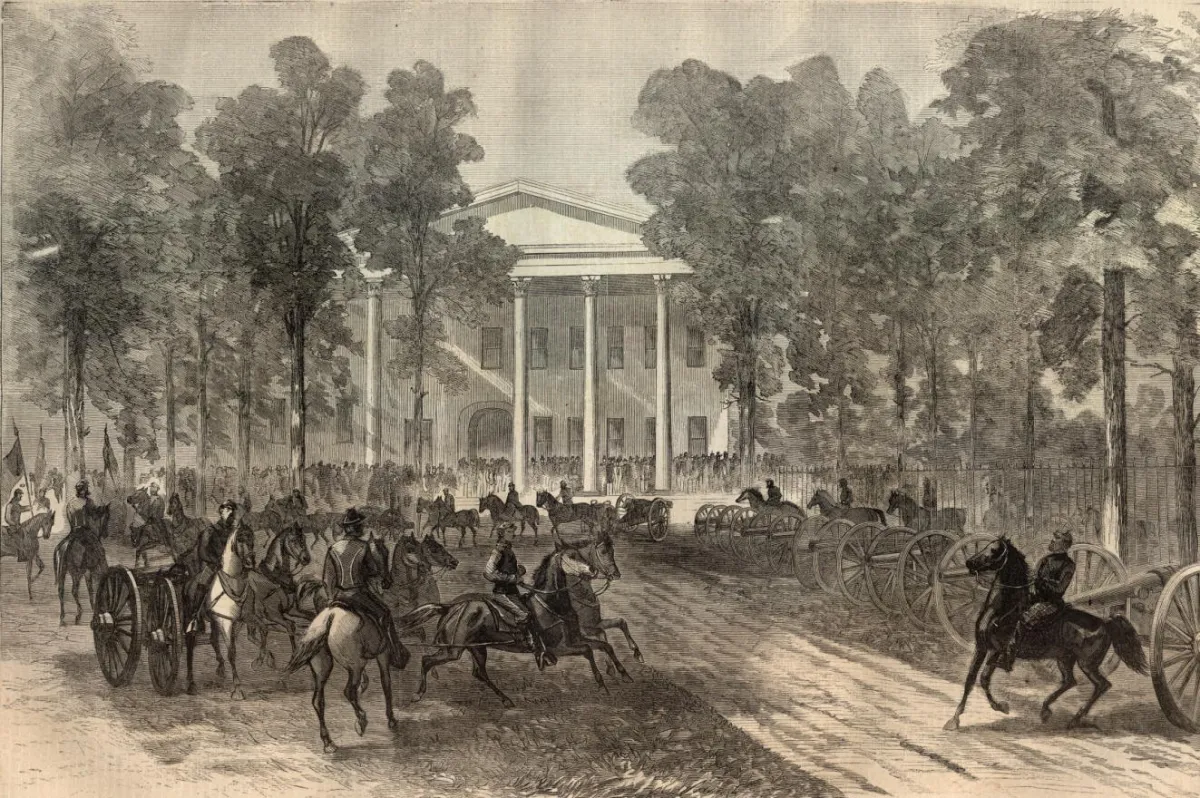 Photo: War Department, via www.sonofthesouth.net
The mail system alone required extraordinary creativity. Letters addressed to servicemen at the installation were routed through a series of legitimate military postal facilities, creating paper trails that suggested correspondence was flowing to established bases. Meanwhile, the actual recipients were living in a city-sized complex that, according to official maps, contained nothing but empty desert.
Local civilians weren't entirely oblivious — you can't hide 50,000 people without someone noticing the traffic. But the installation's remote location and the military's strategic use of existing mining roads meant that most of the surrounding communities assumed they were witnessing expanded operations at known facilities rather than the construction of an entirely new base.
The Economics of Existing Without Existing
Perhaps most remarkably, the installation processed billions of dollars in military equipment and supplies while maintaining its bureaucratic non-existence. Procurement officers developed an elaborate shell game where materials were officially shipped to documented bases, then "transferred" to the Nevada facility through a series of inter-base logistics that existed only on paper.
The accounting required to make this work was staggering. Every piece of equipment, every gallon of fuel, every meal served in the mess halls had to be documented as existing somewhere else. Military accountants essentially ran parallel bookkeeping systems — one that reflected the installation's actual operations and another that distributed those same resources across legitimate bases for official reporting purposes.
This created some genuinely absurd situations. Congressional budget hearings would include line items for equipment maintenance at bases that were supposedly operating far below capacity, while senators questioned why certain facilities seemed to require suspiciously large allocations for personnel who didn't appear on official rosters.
The Human Cost of Administrative Fiction
For the tens of thousands of service members stationed at the installation, the experience created a unique form of military limbo. They lived in a fully functional military city with all the amenities and infrastructure of a major base, but their official records suggested they were scattered across the western United States.
Families faced particular challenges. Spouses couldn't list the installation as their address for official correspondence, creating complications with everything from voting registration to medical benefits. Children attended schools that technically didn't exist, earning diplomas from educational institutions that had no official recognition outside the military system.
The installation's medical facilities treated thousands of patients whose care had to be documented as occurring at other hospitals. Military doctors became experts at creative medical record keeping, ensuring that patients received proper treatment while maintaining the fiction that the care was being provided elsewhere.
The Great Revelation
The installation's existence only became public knowledge in the 1970s, when congressional investigations into military spending discovered the massive discrepancies between official base rosters and actual personnel deployments. Even then, the revelation came not through whistleblowing or investigative journalism, but through routine auditing that uncovered the elaborate accounting systems needed to maintain the base's non-existence.
By the time Congress demanded explanations, many of the original planners had retired or died, leaving behind a bureaucratic puzzle that took years to untangle. Military historians eventually concluded that what began as a temporary wartime expedient had evolved into an institutional habit — it became easier to maintain the installation's fictional status than to officially acknowledge its existence and integrate it into normal military record-keeping.
The Legacy of Invisible Infrastructure
Today, the former installation site is acknowledged in military histories and appears on contemporary maps, but its decades of official non-existence created lasting complications. Veterans who served there sometimes struggle to document their service history, since their official records suggest they were stationed at bases they never actually visited.
The installation's story reveals something profound about the relationship between bureaucracy and reality. For nearly thirty years, the U.S. military proved that with sufficient administrative creativity, you could operate a major installation while maintaining the official position that it simply didn't exist. In a sense, they created the ultimate government secret — not by hiding what they were doing, but by pretending they weren't doing anything at all.
The next time you wonder whether government bureaucracy might be capable of covering up large-scale operations, remember that they once successfully made 50,000 people disappear while keeping them right where everyone could see them. Sometimes the most effective way to hide something isn't to make it invisible — it's to make it officially impossible.