The Little Train That Technically Shouldn't Have Been Running: Five Decades of Cheerful Federal Noncompliance
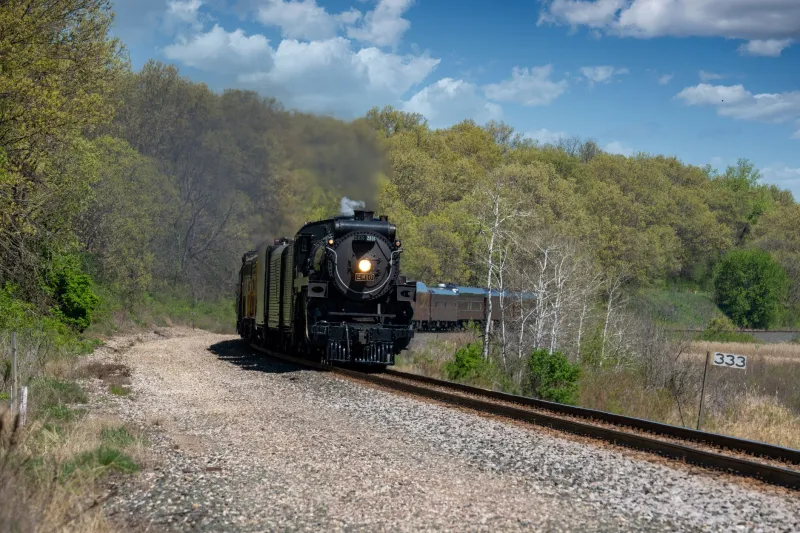
The federal government regulates railroads. This has been true since 1887, when Congress established the Interstate Commerce Commission and decided that the chaotic, monopolistic, occasionally murderous world of American rail needed adult supervision. The rules that followed were extensive, detailed, and — in the case of at least one small regional carrier — almost entirely irrelevant.
Because while Washington was building its regulatory apparatus, some railroads were already running. And a few of them, it turned out, had paperwork old enough to make the new rules awkward to apply.
The Charter That Time Forgot
To understand how a railroad can operate outside federal law for decades without anyone particularly intending for that to happen, you need to understand how railroad charters worked in the nineteenth century.
When a railroad was incorporated, it received a charter from the state legislature authorizing it to operate. These charters were often extraordinarily broad — granting rights to build lines, carry passengers and freight, set rates, and conduct business with a degree of autonomy that later generations of regulators would find startling. They were also, in many cases, perpetual. No expiration date. No automatic review. Just an open-ended grant of authority that sat in a filing cabinet and accumulated legal weight simply by virtue of existing.
When federal railroad regulation arrived, it layered on top of these existing charters rather than replacing them. For most railroads, that created no particular problem — the new federal rules applied, the old charters became largely ceremonial, and everyone moved on. But for a small number of carriers, especially those operating entirely within a single state or on routes that didn't clearly cross state lines, the relationship between the old charter authority and the new federal requirements was genuinely murky.
Running on Ambiguity
The specific railroad at the center of this story — a short-line carrier operating in the interior United States — had been incorporated in the 1870s under a state charter that granted it sweeping operational authority. When federal rail regulations arrived and expanded through the early twentieth century, the railroad's management did what any sensible small business would do when confronted with complicated new rules that might not apply to them: they waited to see if anyone was going to make an issue of it.
Nobody did. Not right away.
The railroad continued operating under its original charter, following some federal guidelines where it was convenient and ignoring others where compliance would have been expensive or operationally disruptive. It paid its state taxes. It maintained its tracks — adequately, if not always impressively. It ran its trains more or less on schedule. And it did all of this while existing in a regulatory gray zone that federal inspectors, when they visited at all, seemed genuinely uncertain how to characterize.
The reports that made it into federal archives from these inspections are a masterpiece of bureaucratic ambivalence. Inspectors noted discrepancies between the railroad's operating practices and current federal standards. They flagged the charter question as unresolved. They recommended follow-up. And then, apparently, the follow-up didn't follow.
Why Nobody Pulled the Plug
There are a few reasons why a railroad can operate in regulatory limbo for fifty years without the government intervening, and most of them come down to the same basic problem: nobody wanted to be the person who had to figure out what the rules actually were.
The charter question was genuinely complicated. If the railroad's original state charter predated the federal regulatory framework and had never been explicitly superseded, what authority did federal regulators have to compel compliance? The answer probably would have been "quite a lot" — federal law generally preempts state law in transportation matters — but getting to that answer would have required litigation, and litigation requires someone to initiate it, and initiating it means admitting that you've been aware of the problem for decades without doing anything.
There was also the simple matter of the railroad's size. Small short-line carriers have always occupied an awkward position in the American regulatory imagination. They're big enough to cause accidents if they're run badly, but small enough that the federal bureaucracy tends to focus its attention on the larger carriers where the stakes are higher. A regional railroad running a few trains a week on a lightly trafficked route is easy to overlook — especially when it's not causing visible problems.
And the railroad, whatever its legal irregularities, wasn't causing visible problems. It was just running trains.
The Moment of Reckoning
What finally forced the issue, as is often the case with long-running bureaucratic anomalies, was not a crisis but a paperwork cascade. A regulatory reorganization in the 1970s — the creation of the Federal Railroad Administration as a standalone agency — prompted a systematic review of short-line carriers that turned up the charter question in a form that was harder to table than previous inspectors had managed.
The resolution, when it came, was characteristically undramatic. The railroad was required to formally bring its operations into compliance with current federal standards, update its operating agreements, and submit to regular inspection under the modern regulatory framework. It did so. Trains continued running. No fines of note were levied. No one went to jail.
The whole affair was treated, by everyone involved, as a paperwork problem that had taken an unusually long time to resolve.
The Quiet Moral of the Story
What makes this story worth telling isn't the illegality — the railroad wasn't doing anything dangerous, and its noncompliance was more technical than substantive. What makes it worth telling is what it reveals about how regulatory systems actually function in practice versus how they're supposed to function in theory.
The rules exist. The inspectors exist. The reporting requirements exist. And yet a railroad can run for fifty years in a legal gray zone because the rules are complicated, the inspectors have other priorities, and nobody wants to be the person who has to sort out a charter dispute that predates their grandparents.
Reality, as it turns out, is considerably more flexible than the rulebook suggests. The trains ran. The passengers rode. The schedules, more or less, held.
And somewhere in a federal archive, a stack of inspection reports gathered dust, each one recommending follow-up that never quite arrived.