The Postal Service's Time War: When Mail Delivery Declared Independence From Reality

When the Government Argued With Itself About What Time It Was
In 1883, American railroads implemented standardized time zones to solve the chaos of hundreds of local time systems operating simultaneously across the country. It was a brilliant solution to a genuine problem — except that the U.S. Post Office decided they wanted no part of it.
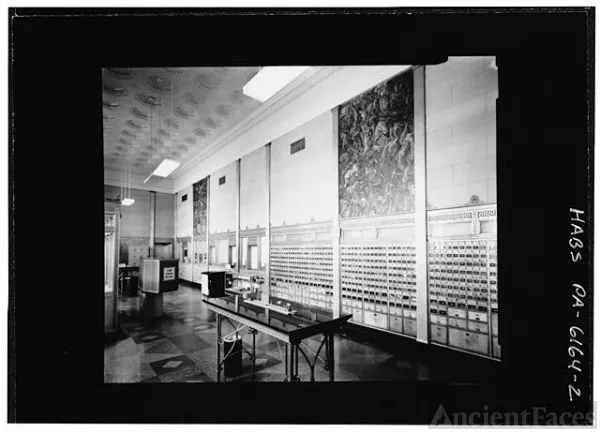 Photo: U.S. Post Office, via media-af-photos.ancientfaces.com
For the next eighteen years, while the rest of America gradually adapted to the new system, postal workers continued scheduling mail routes, stamping letters, and recording deliveries according to local solar time. This created a surreal situation where the federal government was literally operating on two different temporal systems simultaneously, and the results were exactly as absurd as you'd expect.
The Post Office's reasoning wasn't entirely irrational. Postal routes had been established over decades based on local sunrise and sunset times, and postmasters argued that reorganizing the entire system around artificial time zones would be prohibitively expensive and unnecessarily disruptive. What they hadn't anticipated was that their refusal to adopt standardized time would create logistical problems that made the original chaos look organized.
The Mathematics of Temporal Rebellion
Consider what happened when a letter was mailed from a town operating on railroad time to a destination where the post office still used solar time. The departure postmark might read 2:00 PM according to the standardized system, but if the receiving post office was running about an hour behind solar time, the arrival stamp could show 1:30 PM — meaning the letter had apparently traveled backward through time.
This wasn't just a theoretical problem. Business correspondence, legal documents, and time-sensitive communications were being stamped with arrival times that preceded their departure times, creating confusion for anyone trying to establish chronological sequences. Lawyers found themselves arguing cases where postal evidence suggested their clients had received threatening letters before those letters were allegedly written.
The situation became even more complex when mail traveled through multiple post offices operating on different time systems. A single letter might accumulate postmarks showing a journey that appeared to involve multiple trips forward and backward through time, depending on which offices were using solar time versus railroad time.
The Railroad Companies Fight Back
Railroad operators, who had invested enormous resources in standardizing their schedules, watched in growing frustration as postal delays multiplied. Mail trains were supposed to coordinate with local post offices for pickup and delivery, but when postal schedules were based on solar time and railroad schedules followed standardized time, the two systems increasingly failed to mesh.
Trains would arrive at stations to find post offices closed because postal workers were operating on schedules that differed by as much as an hour from railroad time. Conversely, postal workers would arrive at stations to find that mail trains had departed according to their standardized schedules, leaving bags of letters sitting on platforms.
The railroad companies began lobbying Congress to force postal compliance with standardized time, arguing that the Post Office's temporal rebellion was undermining the efficiency gains that time zone standardization was supposed to provide. They pointed out the obvious absurdity of a situation where federal agencies were operating on incompatible time systems.
Small Towns Caught in Temporal Crossfire
For small-town postmasters, the time conflict created daily operational headaches. Many served communities where local businesses had adopted railroad time while the post office maintained solar time. This meant that posted business hours for the post office might not align with the times that local residents expected them to be open.
Some enterprising postmasters began operating dual time systems, posting both solar time and railroad time for different postal functions. Mail pickup might be scheduled according to solar time to coordinate with traditional postal routes, while money order services operated on railroad time to align with banking hours in distant cities.
The dual time systems created their own problems. Customers would arrive expecting services that weren't available because they'd confused which time system applied to which postal functions. Postmasters found themselves explaining not just postal regulations but temporal philosophy to frustrated customers who couldn't understand why mailing a letter required consulting two different clocks.
The Business Community Loses Patience
As American commerce increasingly relied on precise timing for financial transactions, shipping schedules, and business correspondence, the postal time chaos became a serious economic problem. Banks complained that postal delays made it impossible to rely on mail-based financial instruments, since the timing of deliveries had become essentially unpredictable.
Newspapers, which depended on postal distribution, found their delivery schedules in constant flux as mail trains and postal workers operated on incompatible time systems. Publishers began including elaborate explanations in their papers about which time system readers should use when expecting delivery, turning newspaper delivery into a lesson in temporal mechanics.
The manufacturing sector, which was rapidly expanding in the late 19th century, needed reliable mail service to coordinate with suppliers and customers across multiple time zones. The postal service's refusal to adopt standardized time made long-distance business relationships increasingly difficult to maintain.
The Compromise That Nobody Wanted
By 1900, the situation had become untenable. Congress was receiving complaints from railroad companies, business organizations, and individual citizens about the postal time chaos. However, the Post Office had invested seventeen years in maintaining their system and wasn't prepared to simply capitulate to standardized time.
The solution, reached in 1901, was characteristically bureaucratic in its complexity. The Post Office agreed to adopt standardized time for mail train schedules and inter-office coordination, but retained the right to use local solar time for customer-facing services like window hours and local delivery schedules.
This compromise created a hybrid system where postal workers had to track both time systems simultaneously. Mail sorting and transportation operated on railroad time, but local services continued on solar time. Postmasters became temporal translators, constantly converting between the two systems depending on which postal function they were performing.
The Lasting Legacy of Temporal Stubbornness
The postal time war lasted until 1918, when World War I logistics demands finally forced complete standardization across all federal agencies. But the eighteen-year standoff left lasting marks on American timekeeping practices and revealed something fundamental about institutional resistance to change.
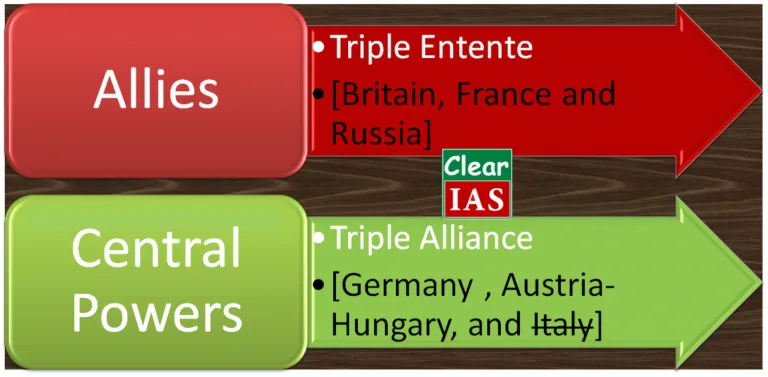 Photo: World War I, via www.clearias.com
The Post Office's temporal rebellion demonstrated that even obviously beneficial standardization could face bureaucratic opposition when it threatened established procedures. Their insistence on maintaining local solar time wasn't entirely irrational — it was based on decades of operational experience and genuine concerns about disrupting service.
But the conflict also showed how institutional stubbornness could create problems far more complex than the original issues that standardization was meant to solve. The postal service's time war turned simple mail delivery into a temporal puzzle that confused customers, frustrated businesses, and required constant explanation.
Today, when we take standardized time for granted, it's worth remembering that the system we use was once controversial enough to split the federal government against itself. The next time you check the time on your phone, consider that for nearly two decades, the simple question "What time is it?" depended entirely on whether you were asking the railroad or the post office.
Sometimes progress isn't just about adopting better systems — it's about convincing institutions to stop fighting improvements that everyone else has already accepted.