Permanently Noon: The Mountain Town That Froze Its Clocks and Meant It
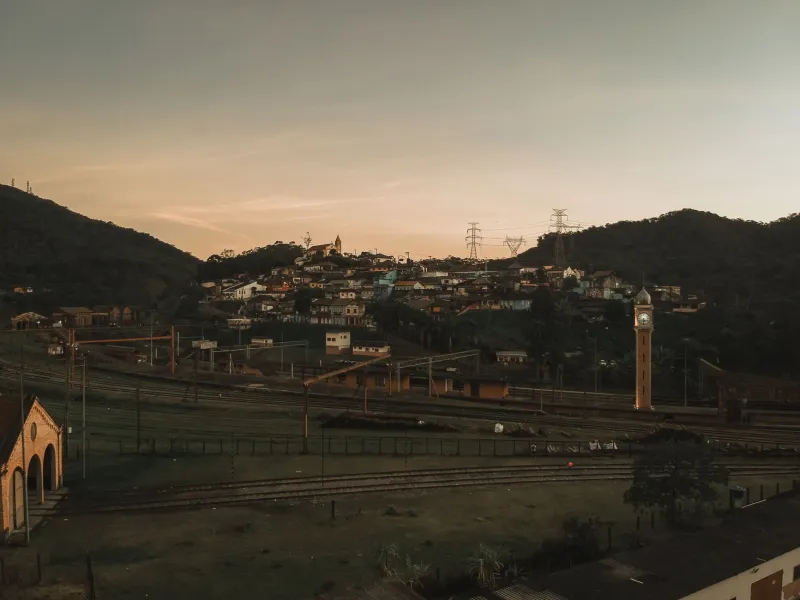
Time zones were, from the beginning, a compromise. When American railroads standardized the country's clocks in 1883, they drew the zone boundaries with one overriding priority: their own scheduling convenience. Towns that happened to sit near a boundary got whatever the railroad decided was most useful for the railroad. The town's relationship to actual solar time — whether noon on the clock corresponded to anything like the sun being overhead — was largely beside the point.
Most towns grumbled and adjusted. One town in the Mountain West decided to do something about it.
The Problem With Being In-Between
The town's geographic position was genuinely awkward. Sitting near the edge of a time zone boundary, it was functionally caught between two regional economies that operated on different clocks. Merchants in the neighboring zone opened and closed on a schedule that didn't match. Train connections that should have been convenient required passengers to mentally convert times. Suppliers on one side of the boundary and customers on the other made scheduling a persistent low-grade headache.
The town's leadership had watched commerce drift toward neighbors that sat more cleanly within a single zone. The time boundary wasn't the only factor, but it was a real one — an invisible friction that made doing business in their town slightly more complicated than it needed to be.
The solution they landed on was audacious in its simplicity. Rather than petition to be moved into one zone or the other — a request that would benefit some residents and disadvantage others, depending on which direction they traded — the town proposed something different: place us at permanent solar noon. Fix our official time to the moment when the sun is actually overhead, and leave it there regardless of what the surrounding zones do.
Washington Said Yes
The federal response to this request is, in retrospect, the most surprising part of the story. The relevant authority — which at various points in this era included the Interstate Commerce Commission and the Department of Transportation's predecessor agencies — reviewed the petition and granted it. The town was given a formal exemption that established its official time as a fixed offset designed to approximate solar noon at that longitude.
The practical effect was that the town now ran on a clock that matched neither of its neighboring zones. For residents who rarely left town, this was mostly invisible. The sun was overhead when the clock said noon. That felt right in a way that the standard zone time never quite had.
For everyone else, it was a headache of the first order.
The Chaos Was Immediate and Ongoing
Mail carriers operating on regional routes had to mentally account for the town's offset every single day. A package with a delivery window that made sense in the surrounding zone required recalculation at the town limits. Postal workers who covered both the town and adjacent communities kept informal conversion charts.
Travelers were worse off. A passenger arriving by train on a schedule printed in the regional zone's time would find that the town's station clock read something different — not dramatically different, perhaps thirty to fifty minutes depending on the exact longitude, but enough to miss connections or show up for appointments at the wrong hour. Hotels developed the habit of asking guests where they'd come from before confirming reservation times.
Local businesses that dealt with suppliers or customers in both adjacent zones effectively operated on three simultaneous time references: their own town's noon-anchored clock, the zone to the east, and the zone to the west. Telegrams and, later, telephone calls required the sender to specify which time they meant.
None of this was catastrophic. The town was small enough that the friction was manageable. But it was a constant, low-level absurdity that became so embedded in daily life that longtime residents stopped noticing it.
Forty Years of Managed Strangeness
What's remarkable is how long the arrangement persisted. For roughly four decades, the town maintained its solar-noon status through multiple rounds of federal time regulation, including the Uniform Time Act debates of the mid-20th century. Each time the question of standardization came up at the federal level, the town's exemption survived — partly through bureaucratic inertia, partly because the town was small enough that overriding its arrangement seemed like more trouble than it was worth.
The reversal, when it finally came, was almost accidental. A broader federal standardization push that swept up dozens of local time anomalies across the country included the town in its scope without anyone in Washington apparently realizing they were ending an arrangement that had been deliberately and formally established. The town's solar-noon status was simply absorbed into the standard zone framework during a routine administrative update.
Local reaction was muted. By that point, a generation had grown up that didn't remember the original petition or the reasoning behind it. The town's peculiar clock had just been the way things were. When it changed, most residents shrugged.
What It Says About Time
There's something genuinely strange about the fact that this worked at all — that a small town could formally negotiate its relationship with time, get federal approval, and maintain that arrangement for forty years. It's a reminder that the clock on the wall is not a natural phenomenon. It's an administrative decision, and administrative decisions can be changed, exempted, and occasionally frozen in place by a sufficiently persistent petition.
Solar noon is real. The sun does reach its highest point at a specific moment, and that moment is different at every longitude. For most of American history, we've agreed to ignore that fact in favor of synchronized zones that make scheduling easier.
One town, for forty years, decided not to agree. And the federal government, in a moment of either flexibility or inattention, let them get away with it.