Rooted in Concrete: The Manhattan Skyscraper That Convinced the Government It Was a Plant
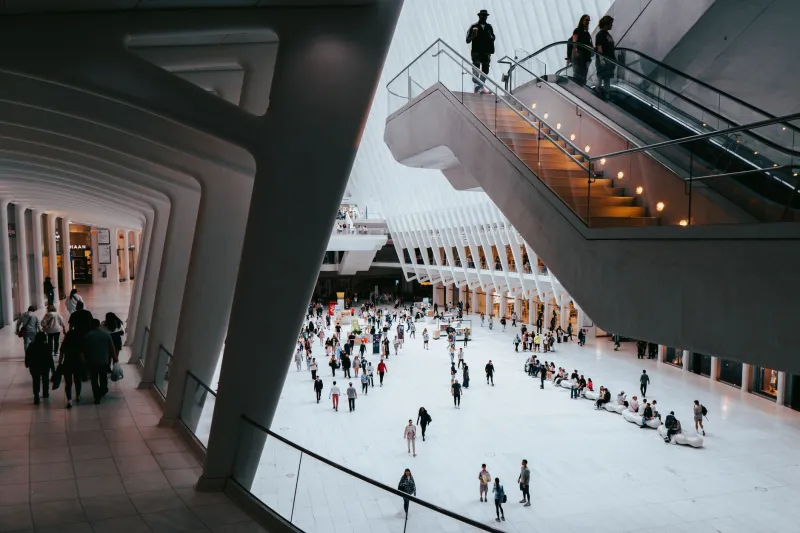
New York City has seen some creative real estate maneuvers over the years. Air rights get bought and sold like baseball cards. Developers carve historic facades off old buildings and bolt them onto new ones to preserve landmark status. The city's zoning code runs to thousands of pages and contains provisions so obscure that entire law firms exist just to decode them.
But nothing quite prepared city planners for the argument that a forty-story glass-and-steel office tower in Midtown Manhattan was, for tax and environmental credit purposes, a living organism.
The Loophole Nobody Saw Coming
In the mid-1990s, New York City was actively trying to green up its urban landscape. The city introduced a series of environmental incentive programs designed to reward developers who incorporated living plant material into their buildings — rooftop gardens, integrated vertical planters, that kind of thing. The language in the original ordinance was, to put it charitably, optimistic. It defined qualifying structures as any "living system that performs biological functions consistent with flora" and offered significant property tax reductions for buildings that met the threshold.
The intent was clear enough: plant a garden on your roof, get a tax break. Simple.
What the drafters apparently did not anticipate was a developer named Gerald Foss, whose legal team read that definition very, very carefully.
Foss was in the process of completing a major commercial tower near Sixth Avenue. The building featured an ambitious internal climate system, a large atrium filled with mature trees, living moss walls on several floors, and a rooftop ecosystem that included over two hundred plant species. His attorneys argued — with a straight face and substantial documentation — that the building as a whole functioned as a single integrated living system. The plants weren't decorations inside the building. The building, they contended, was the support structure for a living organism. Under the city's own language, they argued, the entire structure qualified as flora.
The city's environmental office, apparently blindsided, approved the initial application.
When Botanists Got Involved
For a few years, the classification sat quietly in the municipal records, generating tax credits and raising no particular alarm. Then a routine audit flagged the filing. A city assessor, presumably doing a double take at her screen, escalated the matter. Within months, the case had attracted the attention of urban planners, environmental lawyers, and — improbably — actual botanists.
The botanical community was not amused. Several researchers from institutions including the New York Botanical Garden submitted formal comments to the city arguing that classifying a steel-frame office tower as flora was, and this is a direct paraphrase, "an insult to two billion years of plant evolution." Their position was that a building containing plants was not itself a plant, in roughly the same way that a house containing a dog was not itself a dog.
Foss's legal team pushed back. They commissioned their own environmental scientists, who produced reports arguing that the building's plant systems were so thoroughly integrated into its mechanical and structural functions — regulating air quality, managing humidity, processing carbon dioxide — that the distinction between container and organism had become meaningfully blurred.
This was, by any measure, an extraordinary thing to argue in a courtroom.
The Legal Tangle
The litigation that followed dragged on for the better part of a decade. At various points, the case required judges to rule on questions that no American court had previously considered: What is the minimum biological complexity required for a structure to qualify as a living system? Can an inanimate object possess characteristics that are legally attributable only to organisms? If a building photosynthesizes — even indirectly, through its plant components — does that change its legal identity?
New York's courts were not especially well-equipped for any of this. One appellate judge reportedly requested a basic primer on plant biology before hearing oral arguments. Another ruling hinged partly on whether the building's moss walls were "load-bearing" in an environmental sense, a phrase that meant something very specific to the developer's experts and something entirely different to the city's.
The city eventually prevailed. A 2004 ruling held that the tax credit applied to the plant systems within the building, not to the building itself, and that the original approval had been granted in error. Foss's company repaid a portion of the credits, though the settlement terms were sealed.
What the Plants Left Behind
The case had a lasting effect on how New York and several other major cities draft environmental incentive language. Ordinances that once used broad biological definitions were rewritten with considerably more precision. Legal scholars who specialize in environmental and property law still cite the Foss building as a cautionary example of what happens when well-intentioned regulatory language meets a sufficiently motivated legal team.
The building itself still stands. It still has its atrium trees and its moss walls. It is still, by any reasonable measure, a building.
But for a few years in the late 1990s, it was something the city of New York officially couldn't quite categorize — a forty-story structure that had talked its way, at least briefly, into the plant kingdom.
Somewhere, a botanist is still annoyed about it.