Fifty Cents, Forty-Seven Years, and a Late Fee That Outlasted a Marriage
There are things you expect to find when you finally clean out an old account: a forgotten subscription charge, maybe a dormant balance from a gift card you lost in 2014. What you do not expect is a library fine older than most of your coworkers.
That's exactly what happened to a woman in Concord, New Hampshire, who we'll call Margaret — not her real name, but she asked to keep things quiet, which is understandable given the circumstances. In the spring of 2023, she walked up to the library's front desk to get a new card after moving back to the area. The librarian typed in her name, paused, typed it again, and then looked up with the particular expression of someone who has just discovered something they weren't trained to handle.
Margaret had an outstanding balance. The original fine: fifty cents. The current total: a number that required a second look.
A Book About Wildflowers and a Very Long Nap
The year was 1976. Gerald Ford was in the White House, Rocky hadn't been released yet, and Margaret — then a teenager — checked out a field guide to New England wildflowers from her local branch. She returned it late. By how much is lost to history, but the fine assessed at the time was fifty cents, which she apparently never paid.
What happened next is a masterclass in bureaucratic persistence. The library's records were migrated to a digital system in the early 1990s. Whoever handled the data transfer dutifully entered every outstanding account, including Margaret's. The system, doing exactly what it was designed to do, kept the balance active. And because the library had a standing policy of applying a small monthly administrative fee to unresolved accounts — a policy added in 1988 to encourage prompt payment — the balance grew.
Slowly. Quietly. For decades.
By 2023, the fifty-cent fine had accumulated into something north of two hundred dollars, depending on how the library calculated the administrative fees across three different software platforms and two building relocations. The original librarian who stamped the book had retired in 2001. The branch itself had been rebuilt. The book, almost certainly, no longer existed in any catalog.
The Machinery That Doesn't Forget
What makes this story more than just a funny anecdote is what it reveals about the strange immortality of institutional records. Libraries, like many public systems, were never really designed with a sunset clause for small debts. The assumption was always that people would pay, or the records would be purged during periodic audits. But audits get skipped. Software migrations preserve everything. And a fifty-cent balance is too small to trigger any meaningful review process, but just large enough to stay technically valid.
The librarian who discovered Margaret's account told a local reporter that she'd seen old fines before, but nothing quite like this. "Most of the time it's ten, maybe fifteen dollars from the nineties," she said. "This one had a history."
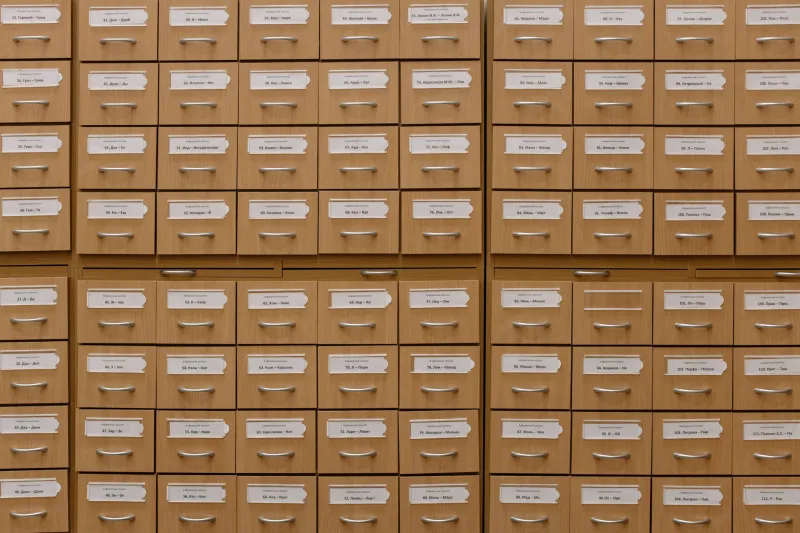
That history included three separate library directors, a full renovation of the children's wing, the adoption and abandonment of two different catalog systems, and at least one period where the records were stored on floppy disks in a filing cabinet.
Through all of it, Margaret's wildflower book fine endured.
What Actually Happened at the Desk
Here's where the story takes a turn that feels almost scripted. Margaret, upon hearing the total, did not argue. She did not demand to speak to a manager. She laughed — genuinely, apparently — and asked if she could see the original record.
The librarian printed it out. The entry was sparse: a name, a date in 1976, a title, and a hand-entered note that simply read overdue - .50. Everything after that was automated. The system had been faithfully tracking a debt that no human had thought about in decades.
Margaret paid. Not the full compounded total — the library director, to her credit, waived everything beyond the original fifty cents once the situation was explained — but she paid the half-dollar that started everything. She reportedly asked for a receipt.
Why This Keeps Happening
Library fine stories pop up every few years, usually good for a few days of local news coverage and a mild national chuckle. But the persistence of Margaret's case points to something genuinely worth noticing: the systems we build to enforce small obligations are often more durable than the obligations themselves.
The fine was never really about the money. It was about a record that no one had the specific reason to close. And in the absence of a reason to close it, the system just kept going — the way systems do.
The wildflower guide, for what it's worth, was almost certainly pulped decades ago. The knowledge it contained is freely available online. The fine it generated outlasted the book, the original librarian, two catalog systems, and apparently one of Margaret's marriages, which she mentioned offhandedly during the conversation at the desk.
She's got a new library card now. She's been very prompt about returns.