The Town That Vanished at Sundown: How Bad Handwriting Made an Entire City Disappear Every Night
When Penmanship Meets Municipal Law
Imagine living in a town that technically ceased to exist every evening at sunset, only to magically reappear with the dawn. For the residents of Millerville, Kansas Territory, this wasn't a fairy tale—it was their bizarre legal reality from 1867 to 1891, all because one territorial judge had terrible handwriting.
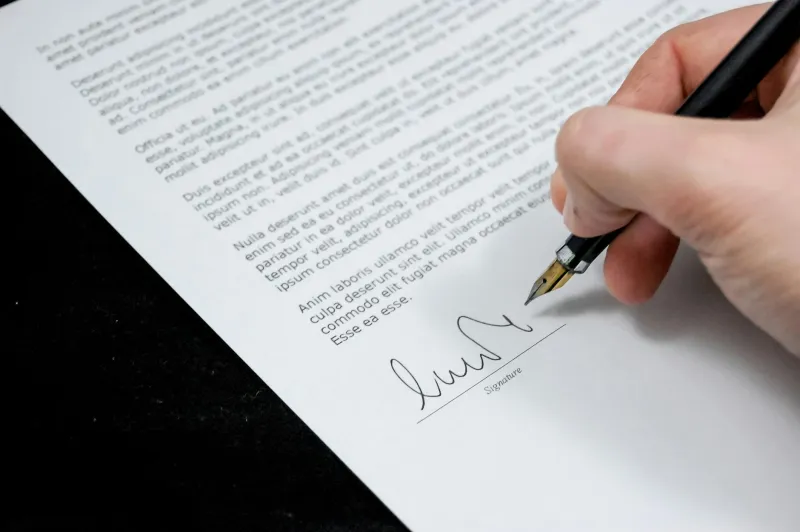
The story begins with Judge Cornelius Whitman, whose flowing script was apparently more artistic than legible. In 1867, when drafting the incorporation charter for what would become Millerville, Judge Whitman intended to write that the town's legal status would be "perpetual and binding." Unfortunately, his ornate penmanship transformed "perpetual" into something that looked suspiciously like "diurnal"—meaning "occurring during the day."
The clerk copying the charter, squinting at the judge's elaborate loops and flourishes, made his best guess and officially recorded the town's incorporation as valid only during "diurnal hours." Nobody noticed the mistake for months.
The Discovery That Changed Everything
The error might have remained buried in bureaucratic files forever if not for a shrewd defense attorney named Marcus Thornfield. In late 1867, Thornfield was representing a client accused of cattle rustling that allegedly occurred at 9 PM on a Tuesday night. While reviewing the town's legal documents for his defense, Thornfield spotted the peculiar wording.
His argument was audacious: if Millerville only legally existed during daylight hours, then crimes committed after dark technically occurred in unincorporated territory, outside the town's judicial jurisdiction. The case should be dismissed.
The local magistrate, initially dismissive, found himself in an unprecedented legal quandary when Thornfield produced the official charter. The wording was clear, even if it was clearly wrong. After three days of deliberation, the court reluctantly agreed that the town's legal authority was, indeed, limited to daylight hours.
Sunset Shenanigans and Legal Loopholes
Word of the ruling spread quickly, and Millerville became the Wild West's strangest legal sanctuary. Gamblers, smugglers, and various ne'er-do-wells flocked to the town, timing their activities for after sundown when they believed themselves beyond the reach of local law.
The situation created absurd scenarios. Shopkeepers couldn't legally collect debts after dark. Property ownership became questionable once the sun set. Marriage licenses issued in the evening were potentially invalid. One couple actually held their wedding ceremony twice—once at sunset and again at sunrise—just to be safe.
Local law enforcement found themselves in an impossible position. Sheriff William Hayes reportedly carried a pocket watch and would sometimes refuse to make arrests after 6 PM, claiming he lacked jurisdiction in a place that didn't technically exist.
The Bureaucratic Nightmare Deepens
The Kansas territorial government, embarrassed by the situation, attempted several fixes that only made things worse. Their first solution was to declare that "diurnal" should be interpreted as "daily," but lawyers argued that "daily" still implied a 24-hour cycle beginning and ending at specific times.
A second attempt tried to retroactively change the charter, but this created new problems: if the original incorporation was invalid during nighttime hours, could the territorial government legally amend a document that was only sometimes legally binding?
Meanwhile, neighboring towns began exploiting Millerville's peculiar status. Merchants would time deliveries to arrive after dark, claiming they couldn't be held to contracts signed in a legally non-existent place. The situation became so chaotic that the territorial legislature held emergency sessions to address what newspapers dubbed "The Millerville Midnight Mystery."
The Great Re-Founding of 1891
By 1891, the residents had endured enough bureaucratic absurdity. Led by Mayor Sarah Henderson—who had been elected during daylight hours but whose authority vanished nightly—the town organized what they called "The Great Re-Founding."
On July 4, 1891, the entire population gathered at dawn for a ceremony that lasted until well after sunset. They voted to dissolve the original incorporation (during legal daylight hours) and immediately re-incorporate under a new charter with crystal-clear language about perpetual legal status.
To ensure no future confusion, they hired three different clerks to copy the new charter, and Mayor Henderson personally verified every word. The ceremony included a symbolic "burning of the sunset" where they destroyed copies of the problematic original charter as the sun set on their last day of part-time existence.
The Legacy of Legible Writing
Judge Whitman, who had unknowingly created the mess, attended the re-founding ceremony. According to newspaper accounts, he apologized publicly and promised to use block letters for all future legal documents. The Kansas territorial government, learning from the Millerville debacle, began requiring all official documents to be reviewed by multiple clerks.
The story of Millerville's intermittent existence became a cautionary tale taught in law schools across the country. It demonstrated how the smallest clerical error could create the largest legal headaches, and why clear communication in legal documents isn't just important—it's essential for maintaining the basic fabric of civil society.
Today, the former site of Millerville is a wheat field, but local historians still mark July 4th as "Perpetual Day," celebrating the moment when one Kansas town finally learned to exist around the clock. The lesson remains relevant: in law, as in life, good handwriting can mean the difference between order and chaos—even if that chaos only happens after dark.