The Great Pacific Duck Escape
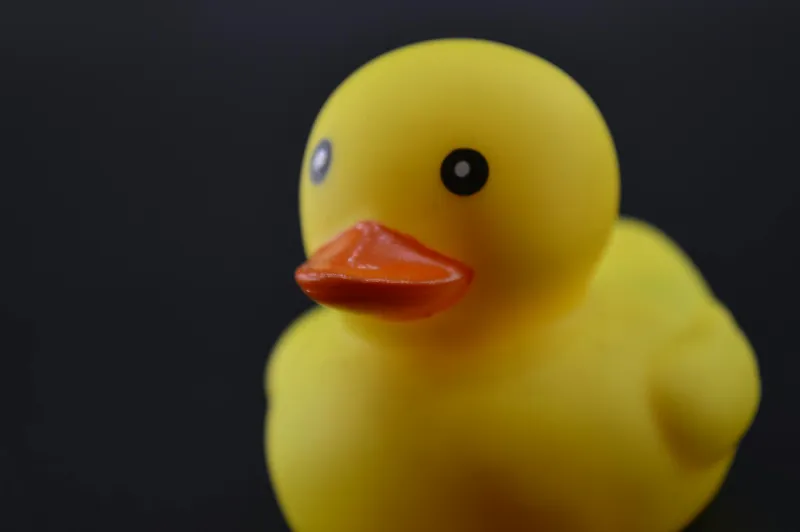
On January 10, 1992, somewhere in the North Pacific, a cargo ship encountered rough seas that would accidentally launch one of the most important oceanographic experiments in modern history. A shipping container broke loose and spilled its contents into the churning waters: nearly 29,000 plastic bath toys, including bright yellow rubber ducks, red beavers, green frogs, and blue turtles.
The crew probably assumed they'd just littered the ocean with toys that would sink and disappear. Instead, they'd unleashed an armada of accidental scientific instruments that would revolutionize our understanding of how the world's oceans actually work.
When Toys Become Science
Dr. Curtis Ebbesmeyer, an oceanographer in Seattle, first heard about the spill months later when reports started trickling in of bath toys washing up on Alaskan beaches. What caught his attention wasn't just that the toys had traveled hundreds of miles — it was that they were arriving in predictable patterns.
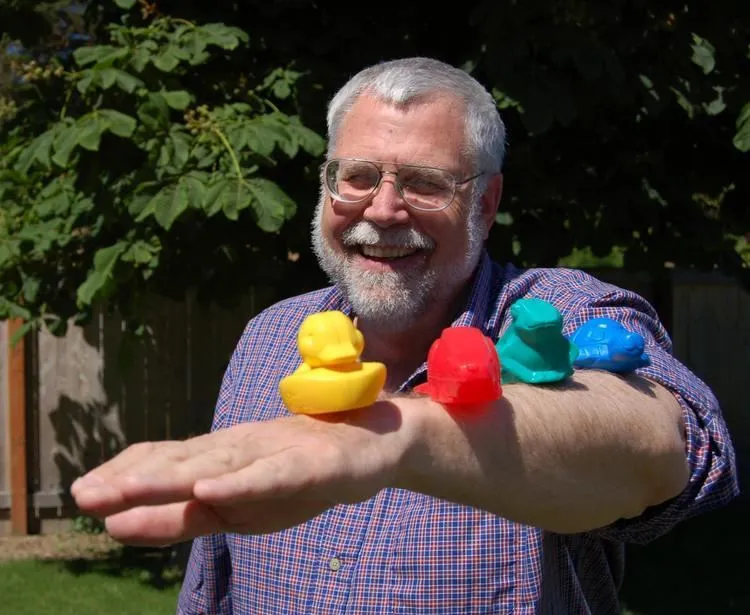 Photo: Dr. Curtis Ebbesmeyer, via alchetron.com
Ebbesmeyer realized he was looking at something unprecedented: a real-world experiment in ocean current tracking that no laboratory could have designed. Unlike traditional scientific floats that transmitted data electronically, these toys were bright, buoyant, and unmistakable. When they washed ashore, people noticed them.
Working with computer modeler James Ingraham, Ebbesmeyer began tracking the toys' movements and comparing them to existing models of Pacific Ocean currents. The results were startling — and often wrong.
The Ducks That Broke the Models
Traditional oceanographic models predicted that objects released in the North Pacific would follow fairly predictable circular patterns called gyres. The rubber ducks had other plans. They scattered in directions that contradicted decades of established theory about Pacific currents.
Some toys rode the Alaska Current north and washed up on beaches from Sitka to the Bering Strait. Others caught the Kuroshio Current and headed toward Japan. But the most surprising group did something that existing models said was nearly impossible — they escaped the Pacific entirely.
In 2003, eleven years after the spill, rubber ducks from the same container began appearing on beaches in Maine and Massachusetts. They had somehow navigated through the Arctic Ocean, past Greenland, and down the Atlantic coast — a journey that existing current maps suggested would take centuries, if it happened at all.
Following the Floating Trail
Ebbesmeyer turned duck-tracking into a citizen science project, asking beachcombers worldwide to report any toys they found. The response was overwhelming. Reports poured in from Hawaii, Japan, Australia, and eventually Europe, creating a detailed map of where the toys had traveled and when they arrived.
Each sighting provided a data point that traditional oceanographic instruments couldn't match. While electronic floats might transmit precise coordinates for a few months before their batteries died, the rubber ducks kept reporting their positions every time someone found one on a beach — for decades.
The toys revealed that ocean currents were far more dynamic and interconnected than scientists had realized. They showed seasonal variations, unexpected shortcuts between ocean basins, and circulation patterns that hadn't appeared in any textbook.
The Science of Accidental Discovery
The rubber duck data helped oceanographers refine their computer models and understand how pollutants, marine life, and even climate patterns move through the world's oceans. The toys had essentially performed a massive, multi-decade dye test that revealed the ocean's hidden highways.
More importantly, the ducks demonstrated that some of the most significant scientific discoveries come from unexpected sources. Ebbesmeyer's work with the bath toys led to better predictions of how oil spills spread, how marine debris accumulates, and how ocean temperatures affect global weather patterns.
The accident also highlighted a growing problem: the toys were part of a much larger issue of marine plastic pollution. While individual rubber ducks became valuable scientific tools, they also represented the millions of tons of plastic waste that enter the oceans every year.
Still Floating After All These Years
Thirty-plus years later, rubber ducks from the 1992 spill are still occasionally washing up on beaches around the world. Computer models now predict that some toys could remain in circulation for another decade or more, continuing to provide data about long-term ocean current patterns.
Ebbesmeyer estimates that several thousand ducks are still out there, slowly degrading but still recognizable. Each one that washes ashore adds another data point to the most comprehensive study of global ocean circulation ever conducted — all because a shipping container couldn't handle rough seas.
The rubber duck spill proved that sometimes the most valuable scientific experiments are the ones nobody planned. It showed that citizen science could produce data that matched or exceeded traditional research methods, and that ordinary people finding toys on beaches could contribute to our understanding of global climate systems.
From Bath Time to Breakthrough
The story of the rubber ducks demonstrates how scientific breakthroughs can come from the most unlikely sources. A shipping accident that should have been a footnote in maritime insurance claims instead became one of the most cited examples in oceanographic research.
Today, when scientists design experiments to track ocean currents, they often reference the rubber duck data as a benchmark for accuracy. The toys that were supposed to help kids learn to swim accidentally taught the entire world how the oceans really work.
In the end, 29,000 bath toys did more to advance our understanding of ocean science than decades of expensive research vessels and sophisticated instruments. Sometimes the best scientific tools are the ones that float.