When Science Meets Superstition
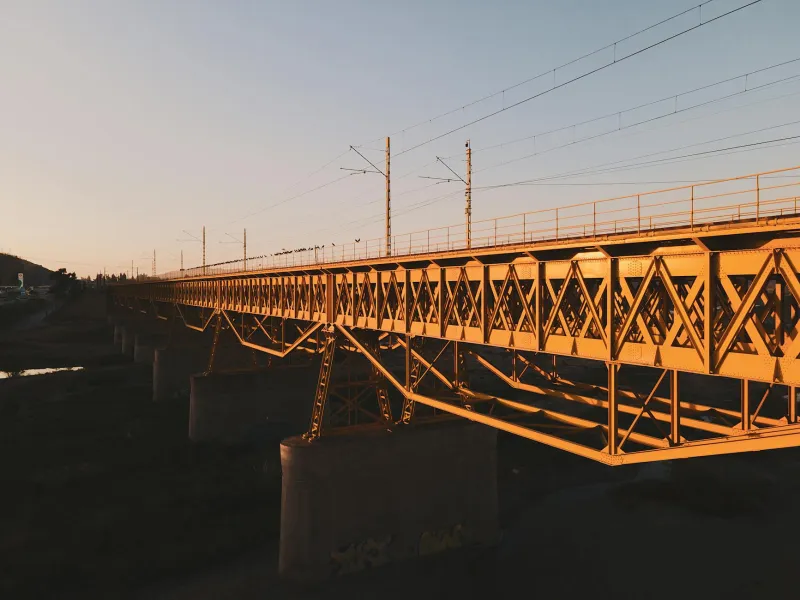
On the morning of November 23, 1876, the eastbound Pennsylvania & Western freight train approached the Millfield Creek Bridge in southeastern Ohio at its usual speed of twenty-five miles per hour. Engineer Tom McCarthy had crossed this particular span hundreds of times over the past two years without incident. The bridge, built just three years earlier using the latest iron truss design, was considered one of the most reliable structures on the entire line.
At exactly 9:47 AM, the bridge collapsed.
The locomotive and three freight cars plunged thirty feet into Millfield Creek, killing McCarthy and two crew members. The disaster made headlines across Ohio, but railroad officials attributed it to a tragic but explainable structural failure—perhaps a defective beam or unexpected metal fatigue.
They rebuilt the bridge using improved materials and more rigorous construction standards. Problem solved.
Except that on November 25, 1877—just two days off from the anniversary of the first collapse—it happened again.
The Pattern Emerges
The second collapse was eerily similar to the first. Another eastbound freight train, another catastrophic structural failure, another crew lost to the creek below. This time, however, railroad executives couldn't dismiss it as coincidence. Two bridge failures on nearly the same date suggested something more systematic at work.
The Pennsylvania & Western Railroad brought in their best engineers to investigate. They examined every piece of wreckage, analyzed the metallurgy of the failed components, and reviewed construction records with obsessive detail. Their conclusion was both reassuring and baffling: there was nothing wrong with the bridge design, materials, or construction methods.
Yet the evidence was undeniable. Two identical bridges, built to the same specifications, had failed in almost exactly the same way on nearly the same date in consecutive years.
The railroad rebuilt again, this time with even more robust specifications and continuous monitoring. They stationed an inspector on-site during the weeks leading up to November 23, 1878, determined to prevent a third disaster.
It didn't matter. On November 24, 1878, the third Millfield Creek Bridge collapsed right on schedule.
When Engineers Consider Ghosts
By 1879, rational men were beginning to entertain irrational explanations. Railroad executives, who had built their careers on engineering precision and scientific analysis, found themselves seriously discussing whether the Millfield Creek crossing might be cursed.
Local newspapers embraced the supernatural angle with enthusiasm. The "Millfield Creek Curse" became a sensation, drawing curiosity seekers from across the Midwest who wanted to see the site where three bridges had mysteriously failed on the same date. Some visitors reported strange sounds and unexplained phenomena around the creek, feeding the growing legend.
"We had exhausted every scientific explanation," wrote Chief Engineer Robert Hartwell in his private journal. "The bridges were sound. The trains were operating normally. The weather conditions were unremarkable. Yet something was causing identical failures with impossible timing. I am ashamed to admit that I began to wonder if forces beyond our understanding were at work."
The Pennsylvania & Western faced a dilemma. They couldn't abandon the route—it was too important for freight traffic between Pittsburgh and Columbus. But they couldn't keep rebuilding bridges that collapsed on schedule every November. The company's insurance providers were threatening to cancel coverage entirely.
The Seasonal Detective
The breakthrough came from an unexpected source: a junior engineer named William Chen who had been reviewing weather data not for the days of the collapses, but for the weeks preceding them. Chen noticed something that the senior engineers had overlooked in their focus on structural analysis.
Each collapse had occurred during a period of unusual temperature fluctuation. In all three years, an early cold snap in mid-November had been followed by a sudden warming trend just before the failures. The temperature swings weren't dramatic enough to be considered severe weather, but they followed a remarkably consistent pattern.
Chen's theory was elegantly simple: the repeated freeze-thaw cycles were creating expansion and contraction stress in the bridge's iron components. But not in the way anyone expected.
The Hidden Weakness
The Millfield Creek Bridge had been designed with standard expansion joints to accommodate thermal changes. But Chen discovered that the specific temperature pattern that occurred each November created a resonance effect in the bridge's truss system. The iron components would expand and contract in a synchronized rhythm that gradually loosened the bolted connections.
Under normal temperature variations, this wouldn't matter. The bolts were strong enough to handle typical thermal stress. But the particular sequence of temperature changes that occurred around November 23rd each year created a perfect storm of mechanical forces.
"It was like a very slow drumbeat," Chen explained in his technical report. "Each thermal cycle loosened the connections just slightly. Over the course of a week, dozens of bolts would work themselves loose enough to compromise the bridge's structural integrity. The final collapse occurred when a loaded train provided just enough additional stress to exceed the weakened structure's capacity."
The Meteorological Explanation
Further investigation revealed why the temperature pattern was so consistent year after year. Millfield Creek sat in a unique microclimate created by the interaction of cold air flowing down from the Great Lakes and warm air masses moving north from the Ohio River valley. This geographical positioning created predictable weather patterns that repeated annually with remarkable precision.
The late November timing wasn't supernatural—it was meteorological. The same atmospheric conditions that caused the temperature fluctuations occurred every year as seasonal weather patterns shifted, typically during the third or fourth week of November.
Engineering Meets Reality
The solution required a complete redesign of the bridge's expansion system. Instead of standard joints that accommodated general thermal movement, the new bridge incorporated flexible connections designed specifically to handle the repetitive stress patterns that Chen had identified.
The fourth Millfield Creek Bridge, completed in 1880, successfully survived its first November 23rd. And its second. And every November since then for the next forty-three years until it was finally replaced as part of a general rail line upgrade in 1923.
The Legacy of Coincidence
The Millfield Creek Bridge case became a landmark in American engineering education, demonstrating how local environmental conditions could create failure patterns that seemed impossible to predict. Chen's analysis introduced the concept of "seasonal structural stress" to bridge design, influencing construction standards across the country.
More broadly, the case illustrated how human psychology responds to unexplained patterns. When faced with events that seemed to defy rational explanation, even trained engineers began to consider supernatural causes. The story serves as a reminder that coincidence, no matter how unlikely it appears, usually has a logical explanation—even when that explanation is stranger than the supernatural alternatives people initially consider.
Today, the site of the original Millfield Creek Bridge is marked by a small historical plaque that briefly mentions the "engineering challenges" encountered during construction. It doesn't mention curses or supernatural phenomena, but it does note that the bridge failures led to important advances in understanding how local weather patterns can affect structural engineering.
Sometimes the most unbelievable truth is simply that nature has a sense of timing that can make even the most rational people wonder if something larger is at work. In the case of Millfield Creek, that something was just atmospheric pressure and thermal dynamics—but it took three bridge collapses and a lot of soul-searching to figure that out.