When Pork Became a Political Crisis
In the summer of 1855, somewhere along the disputed border between Scott County, Iowa, and Rock Island County, Illinois, a prize boar went missing. What should have been a simple case of livestock theft escalated into a formal declaration of hostilities between two counties, complete with militia mobilization, competing legal claims, and enough bureaucratic paperwork to keep historians arguing about the conflict's resolution for the next 170 years.
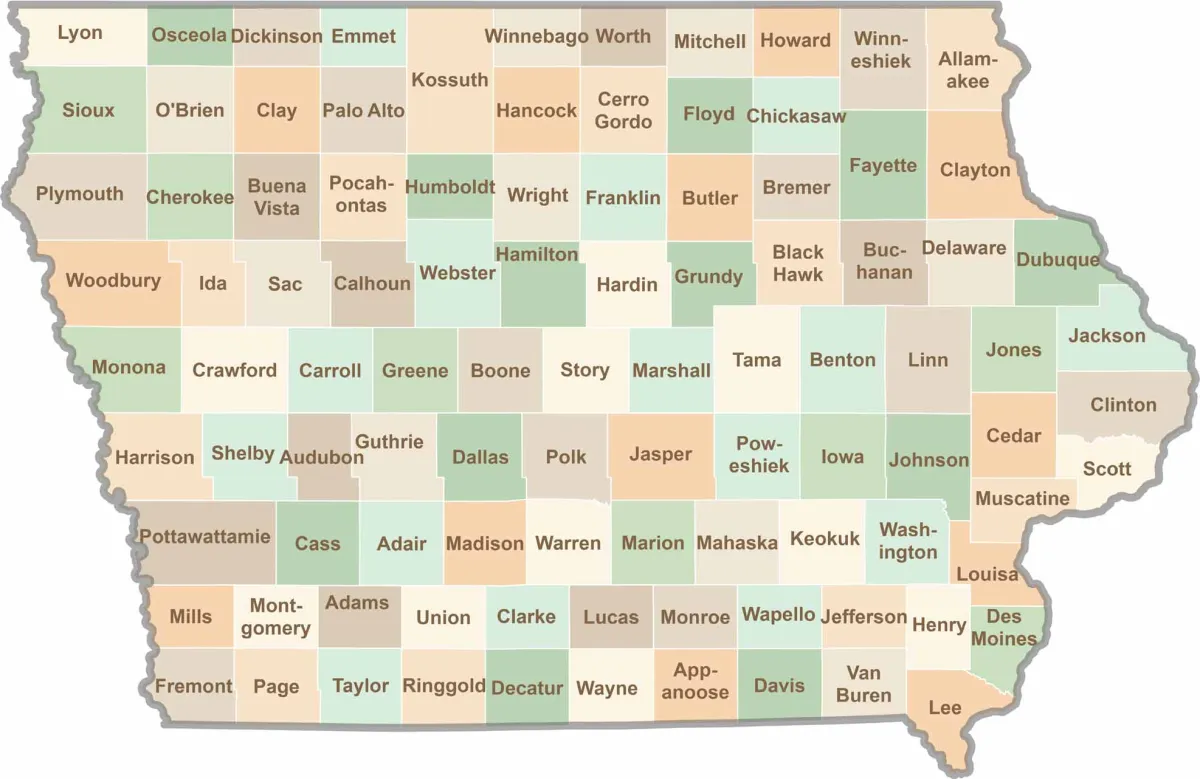 Photo: Scott County, Iowa, via uscountymaps.com
The pig in question belonged to Josiah Henderson, a farmer whose property straddled the poorly surveyed border between Iowa and Illinois. When Henderson discovered his valuable breeding boar had vanished, he immediately suspected his neighbors across the county line — specifically the Mackley family, who had been feuding with Henderson over property boundaries for months.
From Missing Pig to Military Action
What made this particular livestock dispute extraordinary was the legal and political context. The exact border between Scott and Rock Island counties had never been properly surveyed, leaving a strip of valuable farmland in legal limbo. Both counties claimed jurisdiction, collected taxes, and appointed officials for the same territory.
When Henderson filed a complaint with Scott County authorities about his missing pig, they issued a warrant for the arrest of Thomas Mackley. Rock Island County authorities responded by declaring the warrant invalid in their jurisdiction and issuing their own warrant for Henderson on charges of making false accusations.
The situation spiraled when Scott County Sheriff William Morrison attempted to serve his warrant on Mackley's farm. Rock Island County Sheriff James Bradford intercepted Morrison at the county line and arrested him for trespassing. Within hours, both counties had declared the other in violation of their sovereign authority.
The Militias March for Pork
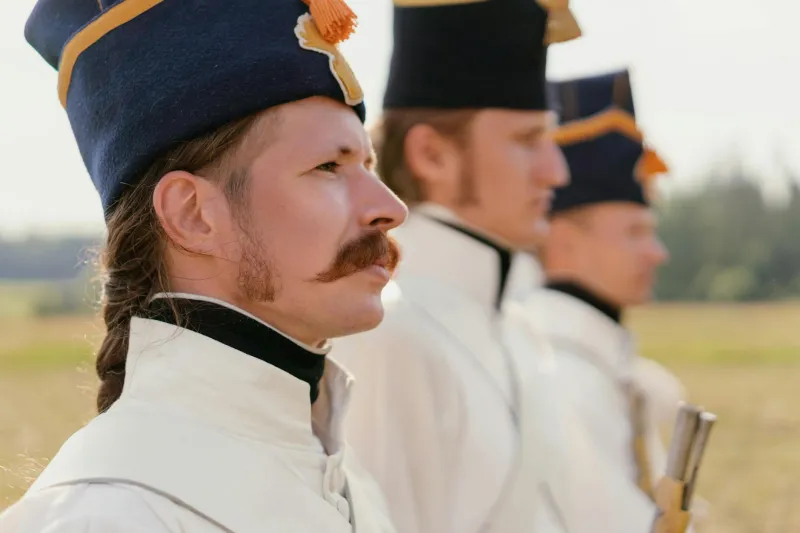
By August 1855, both Scott and Rock Island counties had formally mobilized their militias. Scott County called up 200 men under Captain John Reynolds, while Rock Island County assembled 150 volunteers under Captain William Hayes. The two forces established camps on opposite sides of the disputed border, with the missing pig serving as the unlikely casus belli.
Local newspapers picked up the story, dubbing it "The Great Pig War" and treating it with the kind of breathless coverage usually reserved for actual military conflicts. The Davenport Democrat ran daily updates on troop movements, while the Rock Island Advertiser published editorials about the sacred duty to defend county sovereignty.
Governor James Grimes of Iowa and Governor Joel Matteson of Illinois both found themselves drawn into what they initially assumed was a minor local dispute. When they realized that two counties had essentially declared war over a pig, both governors faced the absurd task of preventing their states from accidentally going to war with each other.
 Photo: Governor Joel Matteson, via www.graveyards.com
 Photo: Governor James Grimes, via images.crunchbase.com
The Bureaucratic Battle That Never Ended
The immediate military crisis ended when federal surveyors arrived to definitively establish the county boundary. The pig, meanwhile, had been found — it had simply wandered into a neighbor's cornfield and gotten stuck. Thomas Mackley was cleared of all theft charges, and Josiah Henderson was left to explain why he'd nearly started an interstate war over a pig that had never actually been stolen.
Both militias were ordered to stand down, and local officials signed what they believed was a comprehensive peace agreement resolving all outstanding legal issues. The problem was that the paperwork was a bureaucratic nightmare.
The original declarations of hostilities had been filed with state authorities in both Iowa and Illinois. The peace agreement was signed by county officials but never properly forwarded to the state level. Federal authorities, who had mediated the boundary dispute, never received copies of the local resolution documents.
The War That Forgot to End
Modern historians examining the archives have discovered that while the practical conflict ended in 1855, the legal paperwork was never properly completed. The formal declarations of hostilities filed by both counties were never officially rescinded through the same channels that had created them.
This bureaucratic oversight means that, technically, Scott County, Iowa, and Rock Island County, Illinois, may still be in a state of declared hostilities over a pig that died of old age more than a century ago. Local historical societies in both counties have turned this into a running joke, with some officials playfully refusing to acknowledge the other county's authority.
In 1955, during the centennial celebration of the conflict, both counties attempted to formally end the war by signing new peace treaties. However, these ceremonies were largely symbolic and didn't address the original legal documents that started the dispute.
The Legacy of Livestock Diplomacy
The Great Pig War became a cautionary tale about how minor disputes could escalate when combined with unclear jurisdiction and wounded pride. It also demonstrated how bureaucratic oversights could create legal situations that outlast the original problems by decades.
The conflict influenced how boundary disputes were handled throughout the Midwest, with states adopting clearer protocols for inter-county conflicts and better documentation requirements for both declarations and resolutions of local hostilities.
More significantly, the pig war highlighted the importance of proper surveying. The federal government accelerated boundary surveys throughout the frontier territories, partly to prevent similar conflicts from escalating into actual military confrontations.
Still Fighting After All These Years
Today, the Great Pig War lives on primarily as a local tourism attraction and a favorite story among historians of absurd American conflicts. Both Scott and Rock Island counties have embraced their shared history, with annual festivals celebrating the most ridiculous war in American history.
Local officials occasionally stage mock negotiations to "officially" end the conflict, but these events are more about historical education and tourism than actual legal resolution. The original documents remain in their respective state archives, technically unresolved.
The pig that started it all has been commemorated with historical markers on both sides of the border, making it possibly the only livestock in American history to have caused an interstate military mobilization and earned multiple monuments.
In the end, the Great Pig War proved that in America, even the most trivial disputes could escalate into matters of state — and that government bureaucracy could keep conflicts alive long after everyone involved had forgotten what they were fighting about. Sometimes the paperwork really is more dangerous than the sword.