The Moldy Accident That Changed Everything
In September 1928, Alexander Fleming returned from vacation to find his London laboratory in typical disarray. Petri dishes covered his workbench, most contaminated with various molds and bacteria that had grown during his absence. As he began cleaning up, Fleming noticed something odd about one particular dish containing Staphylococcus bacteria.
 Photo: Alexander Fleming, via imgcdn.stablediffusionweb.com
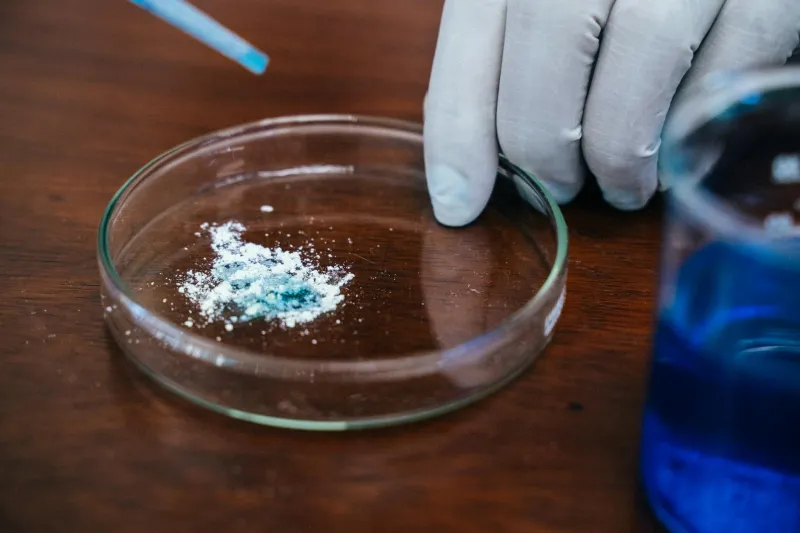
A blue-green mold had somehow invaded the dish, but instead of simply competing with the bacteria, it had created a clear zone around itself — a bacteria-free halo where the Staph colonies had been completely destroyed. Fleming's trained eye recognized this as potentially significant, but even he couldn't have imagined he was looking at the beginning of the antibiotic age.
What happened next was both brilliant and tragically shortsighted. Fleming isolated the mold, identified it as belonging to the genus Penicillium, and published his findings in 1929. He had discovered that this particular mold produced a substance that could kill dangerous bacteria without harming human tissue. He called it penicillin.
Then, incredibly, he essentially forgot about it.
The Decade That Medicine Lost
Fleming's initial enthusiasm for penicillin faded quickly when he encountered practical problems. The substance was difficult to extract, unstable, and seemed to lose its potency rapidly. His attempts to purify it using the chemistry techniques available in 1929 yielded disappointing results. Within a few years, Fleming had moved on to other research, using penicillin only occasionally as a laboratory tool to selectively kill certain bacteria in culture dishes.
Meanwhile, people continued dying from infections that penicillin could have easily cured. Pneumonia, sepsis, and infected wounds claimed hundreds of thousands of lives annually throughout the 1930s. The solution existed, sitting in Fleming's lab notes, but nobody was paying attention.
This wasn't scientific negligence — it was a perfect storm of bad timing, limited resources, and institutional blindness. Fleming was a bacteriologist, not a chemist. He lacked the expertise and equipment needed to purify penicillin effectively. British research funding was tight, and antibiotics weren't even a concept yet. The idea that bacteria could be systematically defeated by medicine was still revolutionary.
The Desperate Rediscovery
By 1939, World War II had created an urgent need for better medical treatments. Two Oxford University scientists, Howard Florey and Ernst Boris Chain, were researching natural antibacterial substances when they stumbled across Fleming's old paper on penicillin. Unlike Fleming, they had access to advanced chemistry techniques and a team of researchers.
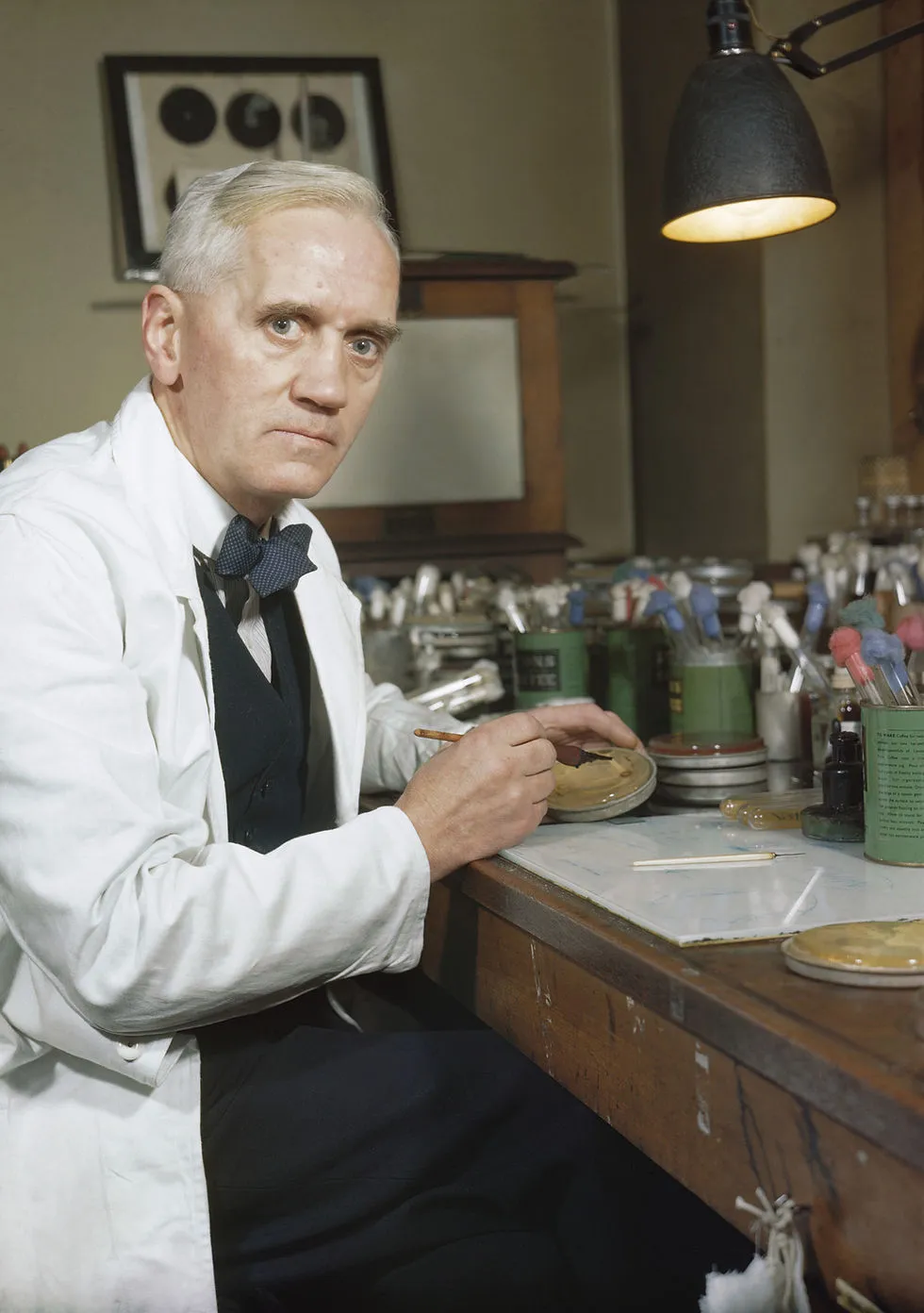 Photo: Howard Florey, via static.wixstatic.com
What followed was a race against time that almost failed at every step. Florey and Chain managed to produce small amounts of purified penicillin and proved its effectiveness in animal tests. But scaling up production proved nightmarishly difficult. The mold was finicky, requiring precise conditions to produce the antibiotic. Early batches were contaminated, ineffective, or produced in quantities so small they were measured in milligrams.
Their first human trial, conducted on Police Constable Albert Alexander in February 1941, was both a triumph and a tragedy. Alexander had developed a severe infection after scratching his eye on a rose thorn. The penicillin dramatically improved his condition within days — until they ran out. Without enough medicine to complete the treatment, Alexander's infection returned with a vengeance, and he died a month later.
The Production Nightmare
Even after proving penicillin's effectiveness, Florey and Chain faced a bureaucratic labyrinth that nearly derailed the entire project. British pharmaceutical companies, focused on wartime priorities, showed little interest in investing in unproven production methods. The government was skeptical about diverting resources to an experimental drug.
Florey made a desperate decision: he flew to the United States in 1941 to seek help from American pharmaceutical companies. This trip, which could have ended in failure, instead triggered the most successful medical manufacturing effort in history.
American companies, led by Pfizer, developed innovative deep-tank fermentation methods that could produce penicillin in massive quantities. But even this breakthrough nearly failed. Early production runs were plagued by contamination problems. Entire batches worth thousands of dollars would spoil overnight when unwanted bacteria invaded the fermentation tanks.
The Coincidence That Saved Millions
The most crucial breakthrough came from an almost absurd coincidence. In 1943, a Pfizer researcher named Margaret Rousseau was walking through a Peoria, Illinois market when she spotted a moldy cantaloupe. Something about the mold caught her attention, and she brought it back to the lab for testing.
That cantaloupe mold turned out to produce penicillin at levels far higher than Fleming's original strain. The Peoria cantaloupe became the parent strain for virtually all subsequent penicillin production. Without Rousseau's random grocery shopping decision, large-scale antibiotic production might have remained economically impossible.
The Patent Battle That Almost Wasn't
As penicillin production ramped up in 1943, another crisis emerged: nobody owned the patent. Fleming had never patented his discovery, considering it unethical to profit from a life-saving medicine. This created a legal nightmare as multiple companies began producing penicillin using different methods.
The situation became so complex that the U.S. government nearly stepped in to nationalize penicillin production. Instead, pharmaceutical companies reached an unprecedented agreement to share production methods and patents, prioritizing public health over profits. This collaboration, forced by wartime necessity, established precedents for how life-saving medicines could be developed and distributed globally.
The Medicine That Almost Died Twice
By 1945, penicillin was saving thousands of lives daily. Soldiers who would have died from infected wounds survived to come home. Childhood diseases that had terrorized parents for centuries became manageable. The antibiotic revolution had begun, but only after a series of coincidences, near-misses, and bureaucratic battles that could have gone differently at any point.
The strangest part of penicillin's story isn't Fleming's accidental discovery — it's how close the world came to losing it entirely. For over a decade, the cure for bacterial infections sat unused in laboratory notes while people continued dying from diseases that could have been easily treated.
If Florey and Chain hadn't decided to research antibacterial substances, if Rousseau hadn't noticed that particular cantaloupe, if American pharmaceutical companies hadn't been willing to invest in unproven production methods, penicillin might have remained a historical footnote instead of becoming the foundation of modern medicine.
Today, when we take antibiotics for granted, it's worth remembering that their existence required not just scientific genius, but an extraordinary series of coincidences, desperate decisions, and collaborative efforts that easily could have failed. The antibiotic age almost never happened — and that makes every pill a small miracle.