The Bridge That Breaks the Bond
For more than a century, dog owners crossing Overtoun Bridge in Dumbarton, Scotland, have experienced the same nightmare: their beloved pets suddenly break away, run to a specific section of the bridge, and leap over the side without warning or apparent reason.
This isn't urban legend or folklore. The incidents are meticulously documented, investigated by animal behaviorists, and have prompted formal studies by multiple universities. What makes the phenomenon truly unsettling is its precision — dogs don't jump randomly from the bridge. They jump from the same 50-foot section, almost always on clear, sunny days, and they're almost always long-nosed breeds like collies, retrievers, and labradors.
Since the 1950s, when record-keeping began, at least 50 dogs have leaped from Overtoun Bridge. Some survive the 50-foot fall; others don't. Most disturbing of all, several dogs that survived the jump have reportedly returned to the bridge and jumped again.
The Pattern That Defies Logic
What transforms Overtoun Bridge from architectural curiosity to genuine mystery is the consistency of the incidents. Dogs approach the bridge normally, walking calmly with their owners. Then, at a specific point roughly two-thirds across the span, something triggers a dramatic behavioral change.
Witnesses describe their dogs suddenly becoming agitated, pulling toward the bridge's parapet, and then leaping without hesitation — behavior that contradicts everything science knows about canine self-preservation instincts.
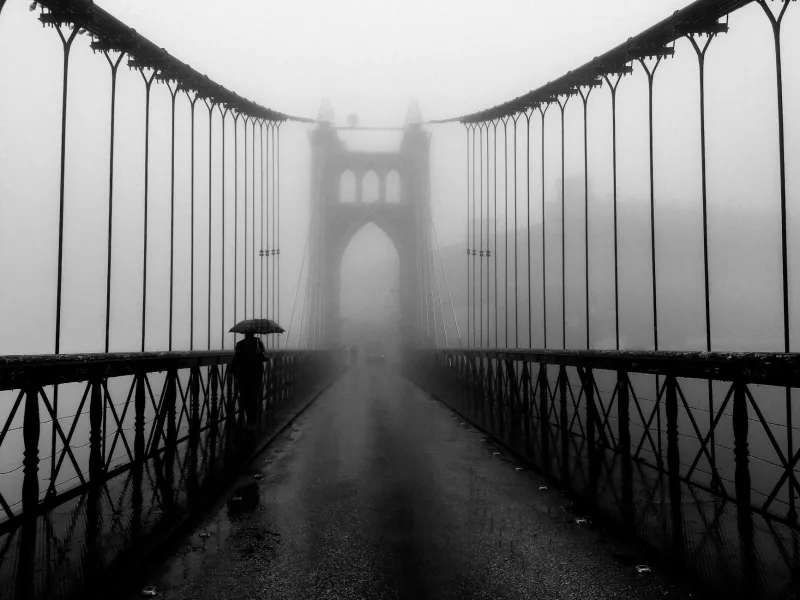
The bridge was built in 1895 by Lord Overtoun, a Victorian philanthropist who wanted to create a grand entrance to his estate. The Gothic Revival structure rises 50 feet above the Overtoun Burn, with solid stone parapets that completely block a dog's view of what lies below. From a dog's perspective, jumping means leaping into apparent nothingness.
When Science Meets the Supernatural
By the 1990s, the Overtoun Bridge incidents had attracted enough attention that the Scottish Society for the Prevention of Cruelty to Animals launched a formal investigation. They brought in animal behaviorists, acoustic specialists, and even paranormal researchers to examine every possible explanation.
Dr. David Sands, a renowned animal behaviorist, spent months studying the bridge and interviewing witnesses. His team discovered several intriguing patterns: the jumps occurred almost exclusively on clear, sunny days; they happened most frequently between spring and early fall; and the affected dogs were overwhelmingly breeds with strong hunting instincts and keen senses of smell.
Sands' team also noticed something crucial that previous investigators had missed: the bridge sits above a valley where mink, a species introduced to Scotland in the 1920s, had established a thriving population.
The Mink Theory: Compelling but Incomplete
After extensive field research, Dr. Sands proposed that dogs were detecting the scent of mink below the bridge and, driven by hunting instincts, leaping toward what they perceived as prey. The theory explained several aspects of the mystery: why only certain breeds were affected, why incidents peaked during mink breeding season, and why clear weather — which carries scent better — correlated with more jumps.
The mink theory gained widespread acceptance and seemed to close the case. But it left troubling questions unanswered. Why would hunting dogs, bred for generations to be controlled and responsive to commands, suddenly abandon all training and leap toward a scent? Why wouldn't they simply pull toward the scent or bark, as they would with any other prey animal?
More problematically, the theory couldn't explain why some dogs that survived the fall returned to jump again. A dog that had experienced the terror and pain of a 50-foot fall should develop a strong aversion to the bridge, not a compulsion to repeat the experience.
The Acoustic Anomaly
In 2006, researchers from Glasgow University introduced another theory: acoustic anomalies. The bridge's stone construction and position in the valley create unusual sound properties that might disorient dogs.
Using sensitive recording equipment, the team documented ultrasonic frequencies bouncing off the bridge's surfaces — sounds inaudible to humans but potentially disturbing to dogs' sensitive hearing. They theorized that these acoustic anomalies might cause temporary disorientation or panic, leading to the jumping behavior.
The acoustic theory explained why incidents clustered in specific weather conditions and why they occurred at a precise location on the bridge. But like the mink theory, it struggled to account for the deliberate nature of the dogs' behavior and the repeat jumpers.
The Repeat Offenders
Perhaps the most disturbing aspect of the Overtoun Bridge mystery is the documented cases of dogs jumping multiple times. Cassie, a golden retriever, survived her first jump in 2004, recovered from her injuries, and jumped again six months later during her next visit to the area.
Ben, a border collie, made headlines in 2009 when he jumped, survived, was rescued, and then immediately attempted to jump again before his owner could restrain him. These cases suggest something more complex than simple scent-driven behavior or acoustic disorientation.
Modern Investigations and Persistent Questions
In recent years, the bridge has attracted attention from international researchers studying animal behavior and environmental psychology. Teams from universities in England, Germany, and the United States have conducted studies using everything from scent analysis to electromagnetic field measurements.
None have produced a definitive explanation. The mink scent theory remains the most scientifically plausible, but it doesn't account for all the documented incidents. Some dogs jump during winter months when mink are less active. Others jump on days when wind patterns would carry scent away from the bridge.
The Human Factor
Interestingly, cats and other small animals cross the bridge regularly without incident. The phenomenon appears specific to dogs, and more specifically to certain breeds of dogs. This suggests something in the bridge environment that uniquely affects canine perception or behavior.
Some researchers have proposed that the mystery lies not in the bridge itself, but in how specific dog breeds process sensory information in that particular environment. The combination of visual obstruction, acoustic properties, and scent trails might create a perfect storm of sensory confusion for animals with certain neurological patterns.
The Ongoing Mystery
Today, Overtoun Bridge remains open to pedestrians and dog walkers, though warning signs now alert visitors to keep pets on leashes. Local authorities have installed higher barriers in the section where most jumps occur, but incidents still happen occasionally.
The bridge has become a pilgrimage site for paranormal investigators, animal behaviorists, and curious tourists. But for all the attention and research, the fundamental question remains unanswered: why do dogs, animals renowned for their loyalty and self-preservation instincts, suddenly abandon everything they know at this one specific location?
After more than a century of incidents and decades of scientific investigation, Overtoun Bridge stands as a reminder that even in our age of advanced animal behavior research, some mysteries resist explanation. Sometimes the most disturbing questions aren't about what we don't know about the supernatural — they're about what we don't know about the animals we think we understand completely.