The Ohio Farmer Who Accidentally Owned an Entire County and Nearly Got Away With It

When Bureaucracy Meets Backwoods America
Samuel Morrison was the kind of Ohio farmer who minded his own business, paid his taxes on time, and never expected to accidentally become the legal owner of an entire county government. But in 1847, a chain of clerical errors, missing signatures, and misfiled paperwork turned his modest land purchase into the most embarrassing real estate disaster in Ohio history.
 Photo: Samuel Morrison, via og-images-v2.himalayas.app
What started as a routine transaction to buy 160 acres of farmland ended with Morrison holding what appeared to be valid legal title to virtually every piece of public property in Muskingum County—including the courthouse where officials were frantically trying to figure out how to undo their mistake.
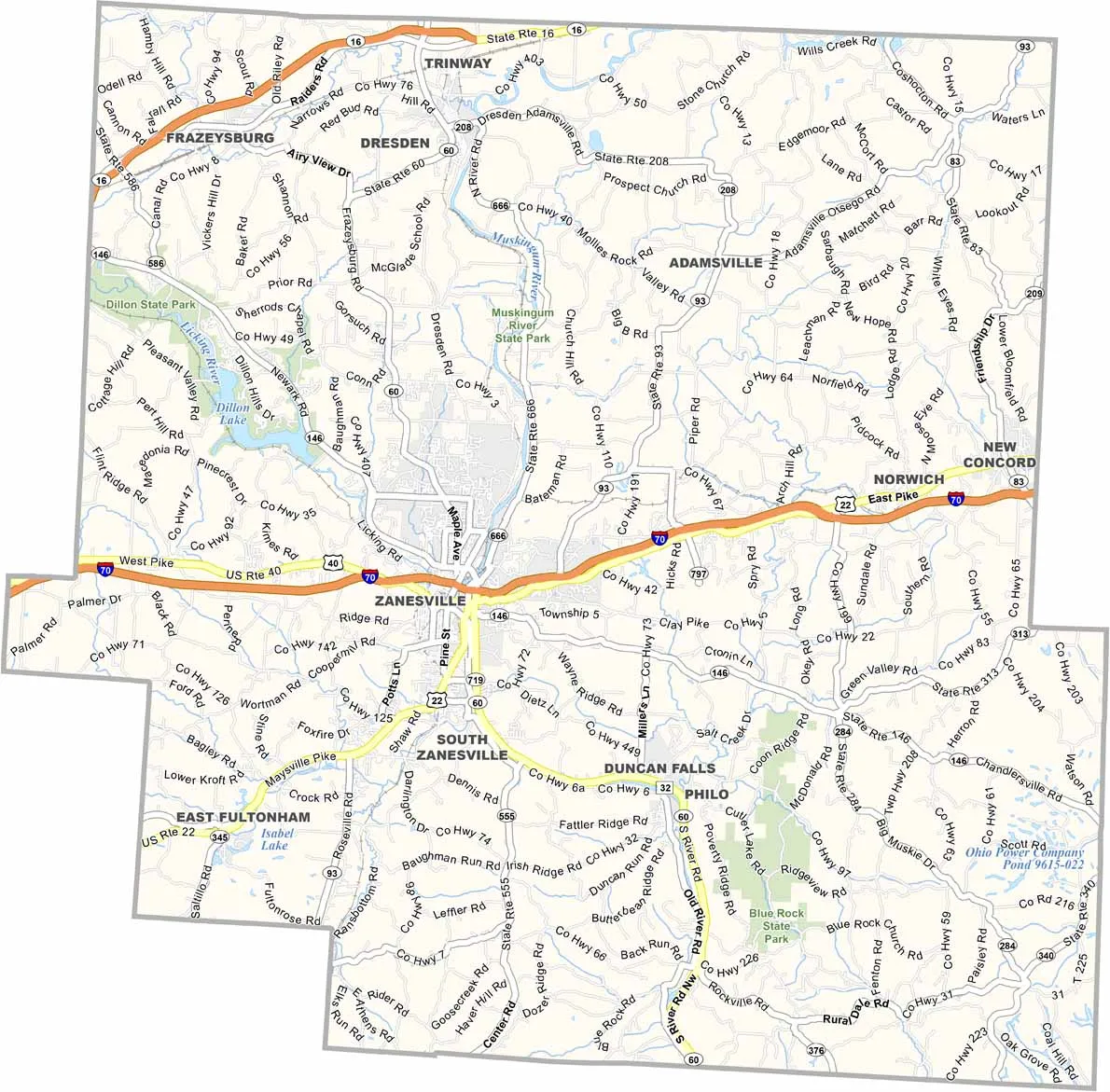 Photo: Muskingum County, via uscountymaps.com
The Paper Trail That Led Nowhere
The trouble began in the Muskingum County Recorder's Office, where clerks were struggling to keep up with the explosive growth of westward expansion. Ohio was still figuring out how to manage land ownership on a scale no American state had attempted before, and the systems were improvised, understaffed, and prone to spectacular failures.
Morrison's original land purchase should have been straightforward: buy a parcel from the federal government, file the deed with the county, pay the recording fee, and become a landowner. But the clerk who processed Morrison's paperwork made a transcription error that would haunt the county for months.
Instead of recording Morrison's purchase as "the northwest quarter of Section 15," the deed was filed as "the northwest quarter of Section 15 and all associated county lands and improvements thereon." The phrase "and all associated county lands" was supposed to be deleted—it was boilerplate language left over from an earlier template—but nobody caught the mistake.
The Discovery That Changed Everything
Morrison might never have realized what happened if not for a property dispute with his neighbor six months later. When he hired a local attorney to research his property boundaries, the lawyer discovered that Morrison's deed appeared to grant him ownership of far more than 160 acres of farmland.
According to the recorded documents, Morrison legally owned the courthouse, the county jail, three bridges, the sheriff's office, and roughly 47,000 acres of what everyone assumed was public land. The deed was properly signed, witnessed, and recorded. By every measure that mattered in 1847 Ohio, Samuel Morrison was the rightful owner of most of Muskingum County's infrastructure.
The attorney, perhaps sensing an opportunity, quietly researched the chain of title for every piece of county property. What he found was a bureaucratic nightmare that revealed just how improvised land ownership really was in frontier America.
The Legal Chaos Nobody Planned For
When Morrison's lawyer presented the county commissioners with his findings, the reaction was immediate panic. The county had been operating under the assumption that they owned their own buildings, but the paperwork suggested otherwise. Worse, they had been collecting taxes and fees on property they might not legally control.
The commissioners called an emergency meeting and discovered the scope of their problem. The original federal land grants that established Muskingum County had been processed through a patchwork system of territorial offices, state agencies, and local clerks. Nobody had maintained a master list of what property belonged to whom, and the filing systems were so chaotic that reconstructing the true ownership would take months.
Meanwhile, Morrison found himself in the surreal position of technically owning the building where county officials were meeting to discuss what to do about him. When the sheriff came to serve him with legal papers, Morrison could have theoretically ordered him off his own property.
The Solution That Almost Worked
Morrison's attorney proposed a solution that was elegant in its simplicity: the county could purchase back their own property from Morrison for a nominal fee, plus compensation for the legal costs and inconvenience. It was essentially a do-over that would clean up the paperwork and restore the status quo.
The county commissioners were initially receptive, but when word of the arrangement leaked to local newspapers, public outrage killed the deal. Voters were furious at the idea of paying Morrison for property that everyone knew should belong to the county. The fact that Morrison had done nothing wrong didn't matter—the optics were terrible.
Instead, the county hired its own legal team and prepared for a court battle that would test the limits of property law in frontier America.
The Court Case That Rewrote the Rules
The legal proceedings that followed became a landmark case in Ohio property law, though not for the reasons anyone expected. Morrison v. Muskingum County wasn't really about who owned what—it was about whether the chaotic paperwork systems of westward expansion could produce legally binding results.
 Photo: Morrison v. Muskingum County, via www.muskingumprosecutor.org
Morrison's legal team argued that the recorded deed was valid and binding, regardless of whether it reflected the original intent. The county's lawyers countered that the deed was obviously the result of clerical error and should be voided on common sense grounds.
The judge faced an impossible choice: uphold the letter of the law and award Morrison ownership of half a county, or overturn a properly recorded deed and undermine the entire system of property ownership that was supposed to make westward expansion possible.
The Compromise That Satisfied Nobody
After three months of testimony, the court reached a decision that was legally sound and practically useless. The judge ruled that Morrison's deed was valid but that the county had established adverse possession of the disputed property through continuous public use.
Essentially, Morrison owned the land, but the county had the right to keep using it. It was a solution that created more problems than it solved, since it left fundamental questions about taxation, maintenance, and legal jurisdiction completely unresolved.
The Aftermath That Changed Everything
The Morrison case prompted Ohio to completely overhaul its land recording systems. The state established standardized forms, required multiple signatures for large transfers, and created a central registry to track public property ownership.
Morrison himself quietly sold his 160 acres and moved to California, where he presumably hoped the land ownership rules were clearer. The county kept operating their buildings while lawyers spent the next five years untangling the paperwork.
What It Reveals About American Growth
The Morrison case perfectly illustrates how America's westward expansion was genuinely improvised. The country was growing so fast that basic systems like property ownership, local government, and legal jurisdiction were being invented on the fly by people who had no idea what they were doing.
County clerks in frontier Ohio weren't trained bureaucrats—they were farmers and shopkeepers who took government jobs because someone had to do them. The fact that their mistakes could accidentally transfer ownership of entire counties reveals just how chaotic and uncertain the process of building America really was.
Today, such an error would be impossible—computer systems, standardized forms, and multiple verification steps prevent clerical mistakes from having such massive consequences. But Samuel Morrison's accidental empire serves as a reminder that the systems we take for granted were once experimental, error-prone, and occasionally capable of producing results that nobody intended.