The Bridge That Broke Everything
Somewhere outside Springfield, Illinois, in the 1890s, stood what railroad workers quietly called "the bridge that breaks trains." It wasn't an official designation — the Chicago & Alton Railroad certainly never advertised it that way — but among the men who operated the locomotives, the reputation was ironclad. Cross that particular span over the Sangamon River, and something would go wrong. Always.
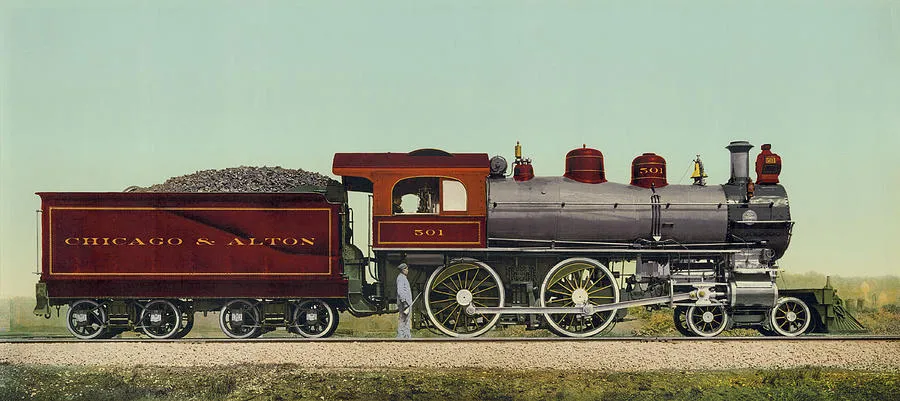 Photo: Chicago & Alton Railroad, via images.fineartamerica.com
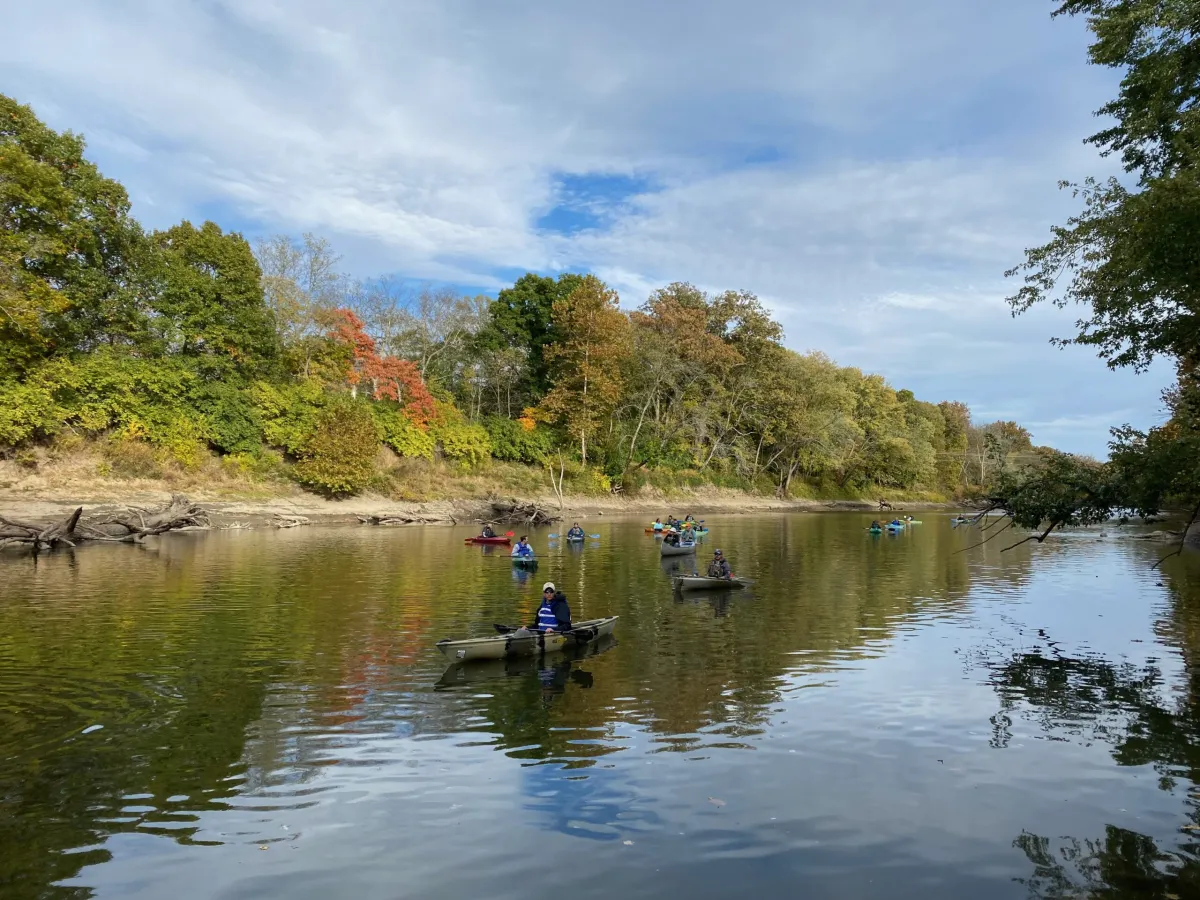 Photo: Sangamon River, via menardcountytrailsandgreenways.org
 Photo: Springfield, Illinois, via c8.alamy.com
The problems started small. A pressure gauge would stick. Steam valves would refuse to respond properly. Brakes would engage unexpectedly, bringing heavy freight trains to jarring stops in the middle of the crossing. At first, these incidents were dismissed as coincidence — mechanical failures happen, after all, and railroad equipment in the 1890s wasn't exactly known for its reliability.
When Coincidence Becomes Pattern
But the failures weren't random. They clustered around one specific location with mathematical precision that made veteran engineers deeply uncomfortable. Train after train experienced problems on or immediately after crossing the bridge — problems that mysteriously resolved themselves once the locomotive reached solid ground on either side.
Engineer Thomas McKenna kept meticulous records of his runs, a habit that proved invaluable decades later when historians tried to piece together what actually happened. McKenna's logbooks document seventeen separate incidents over eight months, ranging from minor steam pressure drops to complete engine failures that required rescue locomotives to tow stranded trains off the bridge.
"The engines run fine until they hit that span," McKenna wrote to his supervisor in 1894. "Then something always goes wrong. The boys are starting to talk, and I can't blame them."
The Revolt of the Railroad Men
By 1895, the situation had escalated beyond mechanical problems into a full-blown labor issue. Experienced engineers — men who had spent decades coaxing temperamental locomotives across every kind of terrain — began requesting different routes. When assignments couldn't be changed, some simply called in sick rather than face what they'd started calling "the cursed bridge."
The railroad found itself in an impossible position. They couldn't publicly acknowledge that their infrastructure was somehow cursed — that would be a public relations disaster and potentially a legal liability. But they also couldn't ignore the fact that their most experienced crews were refusing to work specific routes.
Supervisor William Hayes tried reasoning with the men, pointing out that mechanical failures were a normal part of railroad operations. The response, according to company records, was a room full of engineers who could recite from memory every single failure that had occurred on that bridge, complete with dates, times, and specific mechanical problems.
The Railroad's Secret Solution
Faced with a workforce in near-revolt, the Chicago & Alton Railroad made a decision that wouldn't be fully documented until company archives were opened in the 1960s: they quietly rerouted traffic around the bridge. Officially, this was described as "operational efficiency improvements" and "traffic optimization." Unofficially, it was a surrender to superstition.
The rerouting added nearly forty miles to certain freight runs and required coordination with two other railroad companies, but it solved the immediate problem. Trains stopped breaking down mysteriously, engineers stopped calling in sick, and the bridge sat largely unused — a perfectly functional piece of infrastructure abandoned because nobody could explain why it seemed to curse every locomotive that crossed it.
What the Earth Was Trying to Say
The mystery remained unsolved until 1987, when a geological survey conducted for an entirely unrelated infrastructure project finally revealed what had been happening beneath that bridge for nearly a century. The Sangamon River had been slowly undermining the bridge's foundation, creating microscopic shifts in the structure that were too small to detect visually but significant enough to throw off the precise calibrations required for steam locomotive operation.
Steam engines of the 1890s were incredibly sensitive machines. Water levels, pressure readings, and mechanical tolerances all had to be maintained within narrow parameters for safe operation. The tiny structural movements caused by the unstable foundation were just enough to disrupt these systems — not dramatically enough to cause catastrophic failures, but consistently enough to create the pattern of mysterious problems that had terrified railroad crews.
The Science Behind the Superstition
Modern analysis of McKenna's logbooks, combined with geological data, revealed that the "cursed" incidents correlated almost perfectly with periods of heavy rainfall and river flooding. When the Sangamon River was high, the bridge foundation became more unstable, and locomotive problems increased. During dry periods, both the geological instability and the mechanical failures decreased.
The railroad workers of the 1890s had correctly identified a real pattern — they just lacked the scientific tools to understand what was causing it. Their "superstition" was actually an accurate observation of a genuine engineering problem that wouldn't be properly diagnosed for another century.
When Intuition Beats Engineering
Perhaps the most remarkable aspect of this story is how the railroad workers' collective intuition proved more reliable than the engineering expertise of their era. The men operating the trains knew something was wrong with that bridge long before anyone could explain what or why. Their refusal to cross it wasn't blind superstition — it was practical risk assessment based on consistent, documented experience.
The Chicago & Alton Railroad's decision to quietly reroute traffic rather than investigate the problem speaks to how seriously they took their workers' concerns, even when those concerns couldn't be scientifically justified at the time.
The Bridge That Time Forgot
By the early 1900s, the bridge had been effectively abandoned by railroad traffic. It stood for several more decades, occasionally used by maintenance crews but never again by regular freight or passenger service. When it was finally demolished in the 1920s, few people remembered why it had been built in the first place — or why trains had stopped using it.
The story of the "cursed" railroad bridge serves as a reminder that human intuition and collective experience sometimes detect real problems before science can explain them. The railroad workers weren't victims of superstition — they were early warning systems for an engineering issue that wouldn't be properly understood for another century.