San Diego Hired a Rainmaker to End Their Drought and Got the Deadliest Flood in City History Instead
When Desperation Meets Dubious Science
In January 1915, San Diego faced a crisis that pushed city officials to make one of the most spectacularly backfiring decisions in municipal history. After years of drought had left their reservoirs nearly empty and water rationing in effect, they decided to hire a man who claimed he could summon rain from clear skies using secret chemical vapors.
Charles Hatfield, a self-proclaimed "moisture accelerator," promised to fill the Morena Reservoir for the bargain price of $10,000 — but only if he succeeded. Within weeks, San Diego was underwater, dozens of people were dead, and the city found itself in the bizarre position of arguing that getting exactly what they'd paid for was somehow an act of God.
The Rainmaker's Unlikely Rise
Charles Mallory Hatfield wasn't born into weather manipulation. He started as a sewing machine salesman in Los Angeles, but became fascinated with meteorology after reading about European experiments in cloud seeding. By 1902, he'd reinvented himself as a professional rainmaker, claiming to have developed a secret formula that could coax moisture from the atmosphere.
Hatfield's method involved building tall wooden towers and releasing chemical vapors into the air — a mixture he claimed contained 23 different compounds but never revealed publicly. He insisted the vapors created nucleation points that encouraged water vapor to condense into rain clouds.
Whether through luck, coincidence, or actual meteorological knowledge, Hatfield had accumulated an impressive track record. He'd supposedly brought rain to drought-stricken areas across California, earning testimonials from satisfied farmers and small-town mayors. By 1915, he was confident enough to take on his biggest challenge yet.
San Diego's Desperate Gamble
San Diego in 1915 was a city gambling its future on growth. The Panama Canal had just opened, and civic leaders expected a boom in Pacific trade. The problem was water — or rather, the lack of it.
The city's main reservoir, Lake Morena, was at critically low levels after several years of below-average rainfall. Water rationing was in effect, new construction was stalled, and the promised economic boom seemed impossible without a reliable water supply.
Traditional solutions — building new reservoirs, drilling wells, importing water — would take years and cost millions. When Hatfield approached the city with his unconventional offer, desperate officials decided to take a chance.
The contract was elegantly simple: Hatfield would fill Lake Morena to overflowing by December 20, 1915, or receive no payment. If he succeeded, the city would pay him $10,000 — roughly $300,000 in today's money. It seemed like a no-lose proposition.
The Towers Go Up
In early January 1915, Hatfield and his brother Paul began construction of their weather modification apparatus near Lake Morena, about 60 miles east of San Diego. The setup was surprisingly modest: wooden towers about 20 feet tall, topped with galvanized tanks that released Hatfield's secret chemical mixture into the atmosphere.
Local newspapers covered the installation with a mixture of skepticism and desperate hope. Photographs show the Hatfield brothers standing beside their towers, looking more like frontier inventors than scientific revolutionaries.
Hatfield began his operations on January 1, releasing his vapors into clear skies while making confident predictions about incoming weather patterns. For the first few days, nothing happened. San Diego residents joked about the city's expensive new "rain dance."
Then the skies began to change.
When the Heavens Opened
On January 10, light rain began falling across San Diego County. Hatfield claimed credit immediately, though meteorologists noted that weather patterns suggested natural precipitation was already developing.
The rain continued intermittently for several days, then intensified dramatically. By January 15, what had started as welcome showers had become a relentless deluge. Streams that had been dry for months turned into raging torrents.
The situation escalated rapidly. On January 17, the Lower Otay Dam, weakened by years of drought and suddenly overwhelmed by runoff, catastrophically failed. A 40-foot wall of water roared down the Otay Valley, destroying everything in its path.
Disaster Unfolds
The dam failure was just the beginning. As rain continued to pound the region, other infrastructure began failing in sequence. The Sweetwater Dam nearly collapsed, forcing emergency evacuations. Railroad bridges washed out, cutting San Diego's connection to the outside world.
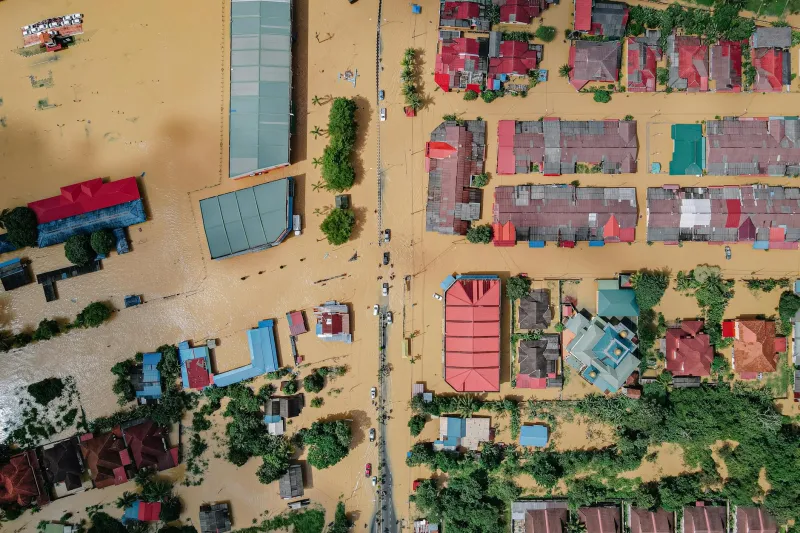
Downtown San Diego flooded as storm drains, designed for the region's typically mild weather, proved completely inadequate. The Coronado ferry stopped running when the bay became too rough to navigate safely. Neighborhoods that had never seen significant flooding found themselves under several feet of water.
The human toll mounted quickly. At least 20 people died in the flooding, with dozens more injured. Property damage reached millions of dollars — a staggering sum for a city of fewer than 40,000 residents.
The Rainmaker's Dilemma
As the disaster unfolded, Hatfield found himself in an impossible position. The rain was exactly what San Diego had hired him to produce, but the consequences were far beyond what anyone had anticipated.
Lake Morena, the target of his efforts, had indeed filled to overflowing — and then kept filling. The reservoir reached levels not seen in decades, accomplishing Hatfield's contractual obligation while contributing to the regional flooding.
Hatfield maintained that his process was working perfectly; the problem was that San Diego's infrastructure couldn't handle the abundance of water he'd delivered. He compared the situation to ordering a large meal and then complaining when it wouldn't fit on a small plate.
The Legal Battle Begins
When the floods finally receded in late January, Hatfield presented himself at San Diego City Hall to collect his $10,000 fee. He'd fulfilled his contract exactly as written — Lake Morena was full to overflowing, and the city's water crisis was solved.
City officials, facing millions in damage claims and mounting public anger, refused to pay. They argued that the devastating floods proved Hatfield's methods were dangerous and that the city couldn't be held responsible for hiring him.
The legal reasoning was creative: if Hatfield had actually caused the rain, then he was liable for the flood damage. If he hadn't caused the rain, then he hadn't earned his fee. Either way, the city claimed, they owed him nothing.
Science or Coincidence?
Modern meteorologists studying the 1915 San Diego floods have reached mixed conclusions about Hatfield's role. The weather patterns that produced the heavy rainfall were consistent with natural El Niño conditions that were developing in the Pacific.
However, the timing was remarkable. Hatfield began his operations on January 1, and significant rain began falling within 10 days. The intensity and duration of the precipitation, while not unprecedented, were highly unusual for the region.
Some researchers suggest Hatfield may have had genuine meteorological knowledge that allowed him to predict incoming weather patterns, then time his "rainmaking" activities to coincide with natural precipitation. Others maintain the entire episode was an elaborate coincidence.
The Aftermath That Changed Everything
The 1915 floods transformed San Diego in ways no one anticipated. The disaster forced the city to completely rethink its infrastructure, leading to improved flood control systems and more robust dam construction standards.
Ironically, the floods also solved San Diego's immediate water crisis. Lake Morena remained full for years afterward, and the city's reservoirs had been recharged to levels that supported continued growth.
Hatfield never received his $10,000 payment, despite years of legal battles. The case established important precedents about municipal liability and the limits of government contracts with unconventional service providers.
Legacy of an Impossible Success
Charles Hatfield continued working as a rainmaker until his death in 1958, though he never again attempted a project as ambitious as the San Diego contract. He maintained until the end that his methods were scientifically sound and that the 1915 floods proved his effectiveness, not his culpability.
The Hatfield case remains a unique chapter in American municipal history — the only time a major city hired someone to control the weather and got exactly what they asked for, with catastrophic results. It stands as a cautionary tale about the dangers of desperate solutions and the unpredictable consequences of getting exactly what you wish for.
Today, San Diego enjoys abundant water supplies and sophisticated flood control systems, partly thanks to lessons learned from the disaster that Charles Hatfield may or may not have caused. The city got its rain, paid a terrible price, and learned that sometimes the cure can be worse than the disease.