When Australia's Military Lost a War Against Flightless Birds — and Parliament Had to Explain Why
When Australia's Military Lost a War Against Flightless Birds — and Parliament Had to Explain Why
Most countries go to war against other nations. In 1932, Australia decided to wage war against emus — and somehow managed to lose.
Yes, you read that correctly. The Australian government actually deployed military personnel with machine guns to fight a population of large, flightless birds. And those birds won so spectacularly that it became an international embarrassment requiring parliamentary explanation.
The Enemy Advances
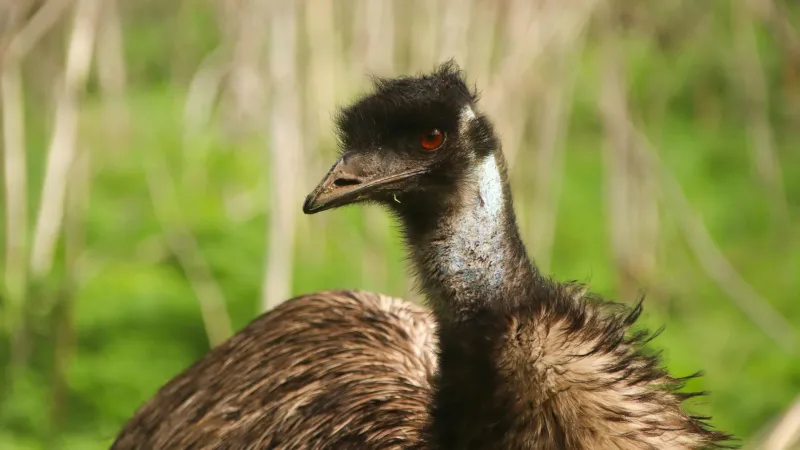
The trouble began in Western Australia, where approximately 20,000 emus had decided to crash the party on local farmland. These weren't your average backyard birds — emus stand six feet tall, weigh up to 130 pounds, and can run 30 miles per hour. Think of them as feathered tanks with attitude problems.
The Great Depression had already devastated Australian farmers, and now these oversized birds were destroying crops, breaking through fences, and generally making life miserable for anyone trying to grow food. The emus had migrated from their usual breeding grounds, attracted by the farmers' wheat fields and the water sources that came with human settlement.
Local farmers pleaded with the government for help. Their solution? Send in the military.
Operation Emu Begins
On November 2, 1932, Major G.P.W. Meredith arrived in Western Australia with two soldiers, two Lewis machine guns, and 10,000 rounds of ammunition. Their mission: eliminate the emu threat through superior firepower and military tactics.
It should have been a massacre. Machine guns versus birds that can't fly? The outcome seemed obvious.
Except nobody had consulted the emus about their role as sitting ducks.
The Birds Fight Back
What happened next defied all military logic. The emus, despite lacking any formal combat training, proved to be tactical geniuses.
First, they refused to cooperate with traditional military strategy. Instead of clustering together for easy targeting, the emus scattered into small groups. When the soldiers approached, the birds would split up and run in different directions, making it impossible to get clean shots with the machine guns.
Even more frustrating, the emus seemed to develop an understanding of the weapons' range. They would stay just far enough away to avoid accurate fire, almost as if they were taunting the soldiers.
Major Meredith quickly discovered that emus are surprisingly difficult to kill. Their thick feathers and tough skin meant that even direct hits didn't always bring them down. Some birds absorbed multiple rounds and kept running, leading one soldier to compare them to "armored tanks."
The Tactical Genius of Flightless Birds
The emus' most brilliant strategy was their use of terrain. Western Australia's scrubland provided perfect cover, and the birds used it masterfully. They would disappear into the brush whenever the soldiers approached, only to emerge elsewhere and continue their crop destruction.
Even when the military managed to kill some emus, others would immediately move in to take their place. It was like fighting a hydra, except the hydra was six feet tall and extremely fast.
The soldiers tried mounting the machine guns on trucks to increase mobility, but this backfired spectacularly. The rough terrain made accurate shooting impossible, and the emus seemed to enjoy the chase, leading the military vehicles on wild goose chases — or rather, wild emu chases — across the countryside.
Retreat and International Mockery
After six days of combat, Major Meredith had fired 2,500 rounds of ammunition and killed approximately 200 emus. Considering the original population of 20,000, this represented a tactical disaster of epic proportions.
Faced with an enemy that refused to follow conventional military doctrine, Major Meredith made a decision that would echo through history: he formally requested a retreat.
On November 8, 1932, the Australian military officially withdrew from combat against the emus. The birds had won.
Parliamentary Embarrassment
Word of Australia's defeat spread quickly, and the international press had a field day. Headlines around the world mocked the military that couldn't defeat flightless birds. British newspapers were particularly gleeful, with one writing that the emus had "won the war" and should be awarded military honors.
In Parliament, opposition members demanded explanations for how the military had managed to lose to animals that lack opposable thumbs. One member sarcastically suggested that the emus should be granted diplomatic immunity as a victorious foreign power.
Major Meredith defended his retreat by noting that the emus had proven to be "remarkably maneuverable" and possessed "excellent tactical skills." He wasn't wrong — the birds had essentially out-generaled the Australian military.
The Aftermath
The Great Emu War officially ended with the birds in control of the disputed territory. The farmers were left to deal with their emu problem through other means, primarily bounty hunting and improved fencing.
Interestingly, a second military operation was briefly considered in 1934, but cooler heads prevailed. The government had learned its lesson about fighting wars against animals that don't understand they're supposed to lose.
Why This Matters
The Great Emu War stands as perhaps history's most absurd military defeat. It's a perfect example of how real life can be stranger than fiction — because no screenwriter would dare create a plot where a professional military loses to a bunch of oversized birds.
More importantly, it demonstrates that nature doesn't always cooperate with human plans, no matter how well-armed those plans might be. Sometimes the underdog wins, especially when the underdog has 20,000 members and home field advantage.
Today, the Great Emu War remains Australia's most embarrassing military campaign and one of history's most bizarre conflicts. The emus, for their part, continue to roam Western Australia, probably still chuckling about that time they defeated the Australian Army.